Could Flooring Become a Subscription Instead of a Purchase?
Key Takeaways
- Subscription models generate predictable recurring revenue streams for flooring businesses beyond traditional one-time purchases.
- Monthly billing subscriptions reduce customer acquisition costs by retaining existing clients through ongoing service agreements.
- Flooring subscription services bundle samples, installation support, and maintenance into recurring packages worth exploring strategically.
What Is A Flooring Subscription Model?
A flooring subscription model allows customers to pay for floors through recurring instalments instead of one large upfront cost. According to the subscription business model glossary definition, a subscription business model enables customers to make recurring payments to access services or receive products at a defined time interval. Applied to flooring, that structure shifts a large one-off purchase into a manageable, ongoing arrangement.
Skipping a big initial outlay matters for landlords managing multiple properties or designers juggling several client projects at once. Without that flexibility, cash flow gets tied up in a single large transaction rather than spread across a project timeline.
How would billing work for a flooring subscription?
Billing intervals could follow several patterns. The same glossary source notes payments can be weekly, monthly, bi-monthly, or even annual, which leaves room for a flooring business to structure plans around property turnover cycles or renovation budgets. A landlord refreshing flats between tenancies might favor a different schedule than a homeowner spreading the cost of a full house renovation.
Which flooring styles would suit a subscription plan?
Coverage would need to be broad, since a workable catalog already spans several distinct categories:
- Herringbone and parquet layouts
- Engineered wood
- Vinyl (LVT)
- Laminate
- Solid oak
- SPC click vinyl
Herringbone-style engineered wood illustrates the variety a tiered plan might need to accommodate. It combines the appearance of solid wood with the stability of manufactured construction, a hybrid that appeals to design-conscious buyers and property managers alike. Offering that breadth under one payment structure would matter more as interest grows in leasing materials rather than buying outright, tying flooring choices into a broader circular economy approach to home and commercial interiors.
Why Is Subscription Business Growing So Fast?
Subscription models are expanding because they turn one-off purchases into ongoing relationships, and flooring looks like a logical next category. Recurring-revenue markets tied to subscription-box style retail have grown by more than 100% a year in recent years, according to commentary cited in coverage of the subscription economy. Sales in that segment rose from $57 million in 2011 to $2.6 billion in 2016, a jump that shows consumers already accept paying for access instead of ownership across many product types.
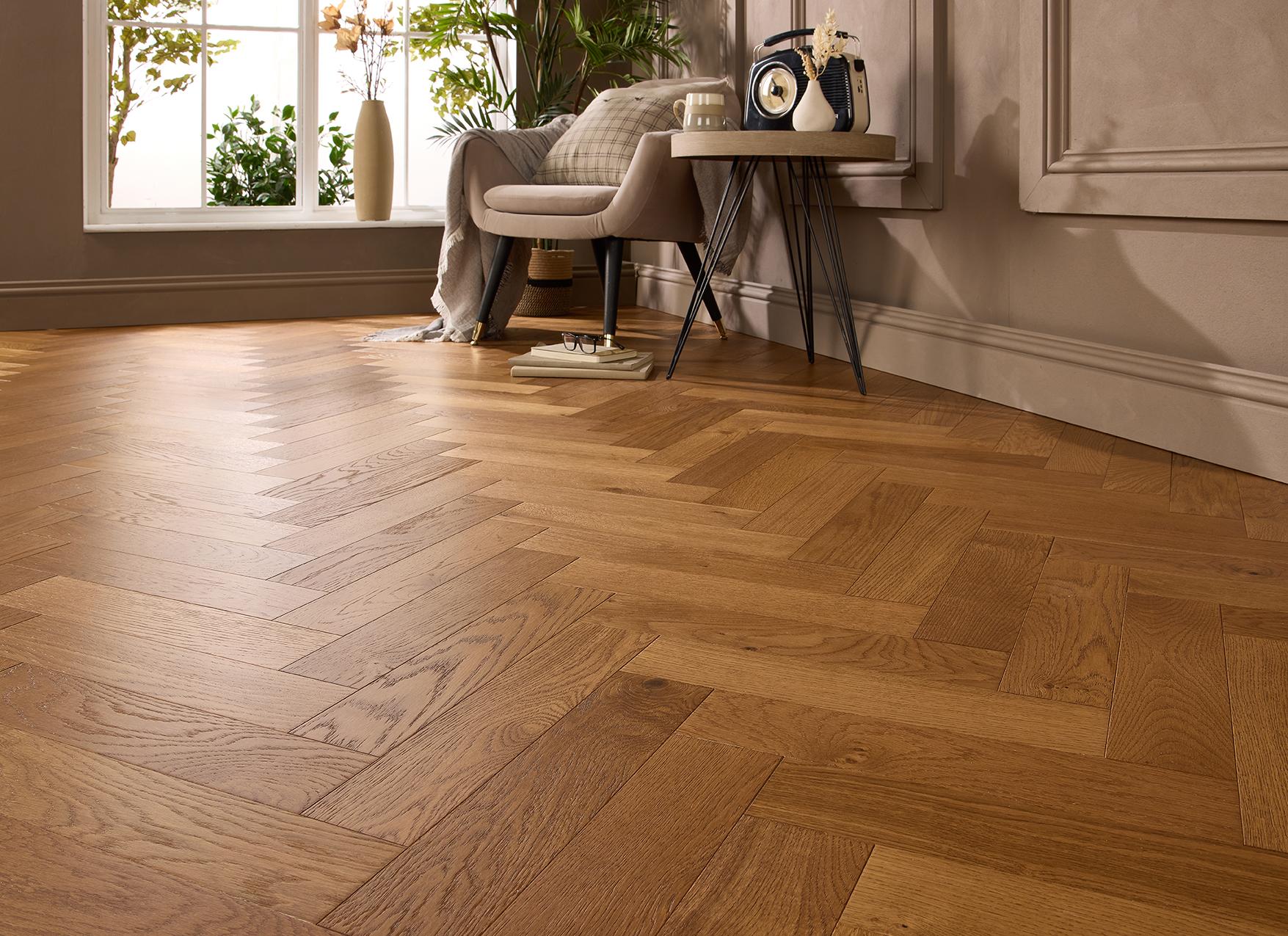
Flooring hasn't caught up to that shift yet, but the ingredients exist. A flooring business built around flexible access would need products that already suit changing tastes and daily wear. Detailed craftsmanship in herringbone and parquet ranges. Each plank highlights distinct grain and color variation, shows manufacturers already segmenting products by style and tier. That kind of segmentation maps naturally onto subscription pricing.
Could Leasing Replace Buying Flooring Outright?
Leasing lets a customer pay over time for access to a product rather than covering the full cost upfront. Applied to flooring, this structure would suit renters, landlords refreshing properties between tenancies, and facility managers who redesign commercial space on a set cycle. Pairing a lease model with a circular economy approach, where worn flooring gets refurbished or reused instead of discarded, would stretch the subscription logic even further. Growth in one area tends to pull the other along with it.
How Could Leasing Work For Flooring?
Leasing flooring works much like a pay-as-you-go relationship, where payments continue over time instead of one large upfront cost. Monthly or periodic charges replace the lump sum a buyer would normally pay at checkout. Landlords juggling several rental units or facility managers overseeing office refits often find this rhythm easier on cash flow, since costs spread across the life of the floor rather than hitting all at once.
This structure also feeds into a wider shift toward a circular economy. Materials stay in use longer instead of being ripped out and binned after one tenancy. A leased floor that outlasts several occupants reduces waste and keeps resources circulating rather than discarded.
Does Leasing Flooring Fit the Circular Economy?
Leasing suits circular thinking because the same floor can serve multiple tenants or business cycles before replacement. Engineered wood's multi-layered construction is built to handle high-traffic hallways and living rooms, which matters when several occupants use the same surface over a lease term. That durability and stability, already why engineered wood ranks as the most popular real-wood option, reduces the need for frequent full replacements.
Which Flooring Suits a Leasing Arrangement?
Commercial venues with heavy footfall already lean on engineered wood for exactly this kind of resilience. Any flooring business weighing leasing terms can look to these settings for evidence of what holds up under repeated, varied use:
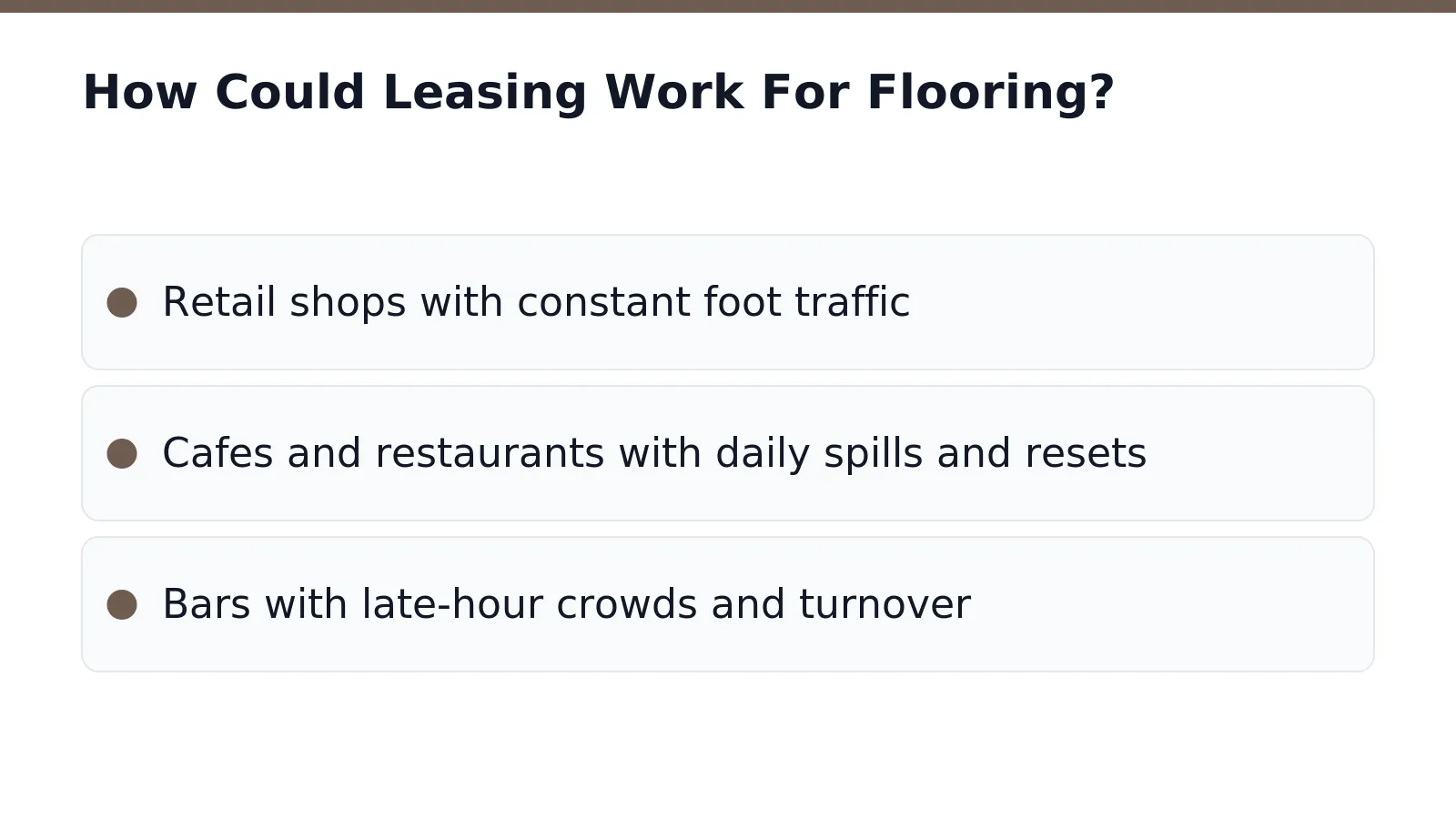
- Retail shops with constant foot traffic
- Cafes and restaurants with daily spills and resets
- Bars with late-hour crowds and turnover
Retailers serving this segment list engineered wood options suited to this type of repeated-use setting.
Could Flooring Support A Circular Economy?
Flooring supports a circular economy when it is cleaned, maintained, and kept fit for reuse rather than discarded after a single cycle of wear. Property owners who treat floors as disposable lose the material value tied up in every room. That loss adds up across a whole portfolio. A flooring business built around repair. Resale needs surfaces that hold their condition well beyond one tenancy or one owner.
Vinyl flooring makes the point clearly. Correct cleaning methods help it keep its original sheen and extend its working life, supporting reuse instead of early replacement. Like any surface in a home, vinyl needs routine maintenance to stay in a condition fit for a second or third occupant, not just the first.
Engineered wood adds another layer to the picture. The same floor suited to a living room also performs well in commercial settings, meaning one product can move between uses rather than being scrapped when a lease ends. Some retailers stock engineered wood options built for exactly that kind of dual use, in homes and offices alike.
Does Leasing Flooring Fit A Circular Model?
Leasing only works as a circular model if occupants see ongoing value and stay with the arrangement. Subscription-style setups live or die by retention: once a customer feels short-changed, they leave, and growth stalls. For landlords and facility managers, that means leased floors only pay off commercially when they are durable enough to pass between tenants without needing full replacement each time.
What Should Buyers Weigh Before Subscribing?
Value delivery decides whether a flooring subscription is worth the commitment. A leasing or payment-plan arrangement only holds up if it delivers the upkeep, flexibility, or cost savings promised at sign-up.
Recurring-payment models for home improvement rarely succeed on price alone. Customers who don't receive the service they were sold tend to cancel quickly. That churn stalls growth for the provider offering the plan. Buyers should treat any flooring subscription the same way they'd judge a gym membership or streaming service: does the ongoing cost match the ongoing benefit?
Maintenance is usually where these arrangements prove their worth. Scheduled inspections and upkeep visits are often the simplest service to bundle into a recurring plan, and that logic extends naturally to flooring. A plan built around routine care, rather than just installation, tends to hold more practical value over time.
Before signing anything, buyers should check a few basics:
- Product range: confirm which styles the plan actually covers, since a flooring business may stock laminate, engineered wood, vinyl, and solid oak under very different terms.
- Care obligations: ask whether daily maintenance, such as sweeping with a soft broom instead of a rotating brush, falls on the customer or the provider.
- Exit terms: clarify what happens to the floor, and the payments, if the circumstances change.
Does leasing flooring support a circular economy?
Leasing keeps flooring in circulation rather than in a skip. A circular economy model only works, though, if the leased product is actually built for reuse or refurbishment, not just resale on credit terms.
FAQ
What is a flooring subscription model?
It lets customers pay for floors through recurring instalments instead of one large upfront cost, shifting a big one-off purchase into a manageable, ongoing arrangement for landlords and designers managing multiple projects.
Billing follows flexible intervals such as weekly, monthly, bi-monthly, or annual payments, structured around property turnover cycles or renovation budgets rather than a single lump-sum transaction.
A workable catalog spans herringbone, engineered wood, vinyl (LVT), laminate, solid oak, and SPC click vinyl, covering styles that already suit changing tastes and daily wear.
Conclusion
In closing, flooring subscription models remain largely experimental rather than mainstream, with adoption constrained by the fundamental economics of durability and infrequent replacement cycles. The sector's trajectory depends on whether manufacturers can develop genuinely circular systems and whether consumers value convenience over ownership. Until those conditions align, traditional purchase models will likely persist as the dominant approach for most residential and commercial spaces.


About The Author