The Next Frontier in Flooring: Surfaces That Resist Bacteria by Design
Antibacterial flooring in UK homes and commercial spaces centers on luxury vinyl tile (LVT), valued for its sealed, non-porous surface and polyurethane top coat. Unlike carpet or grouted tile, LVT traps no fibers or bacteria, wipes clean with mild detergent, and meets healthcare-grade hygiene standards used across UK hospitals and clinics.
Key Takeaways
- LVT flooring eliminates bacteria growth with non-porous, joint-free surfaces requiring no harsh chemicals.
- Antibacterial coatings actively reduce microorganisms in high-traffic areas, ensuring safer, cleaner environments.
- Non-absorbent flooring prevents dirt and germ accumulation better than carpet, wood, laminate, or tile.
Why Is Hygienic Flooring Trending in UK Homes?
Post-pandemic awareness of germs explains most of the shift toward hygienic flooring in UK households. The global pandemic placed a spotlight on invisible threats like bacteria. Contagions, pushing many homeowners to rethink what covers their floors. That shift hasn't faded. Cleanliness now ranks alongside style and durability when UK buyers choose new flooring.
High-traffic areas carry the greatest risk. Hallways, kitchens, and living rooms in UK homes, along with busy commercial spaces, come into contact with a wide range of microorganisms daily. Most of these organisms are harmless. Certain environments, think households with young children, elderly residents, or pets, call for a more proactive approach to managing exposure.
What Makes Flooring Count as Hygienic?
Hygienic flooring resists the buildup of bacteria, mould, and allergens on its surface rather than trapping them in fibers or seams. Antimicrobial flooring achieves this through built-in surface protection designed to limit microbial growth over time.
Is This Only a Concern for Commercial Spaces?
No. While hospitals, care homes, and food production facilities across the UK have long prioritized germ control, the same reasoning now applies to private homes. Demand for antibacterial and dirt-resistant flooring solutions is growing across residential, commercial, and industrial settings alike. Manufacturers supplying the UK market have responded with surface technology built specifically to reduce microbial presence on everyday flooring, not just in specialist facilities.
What Makes a Floor Truly Antibacterial?
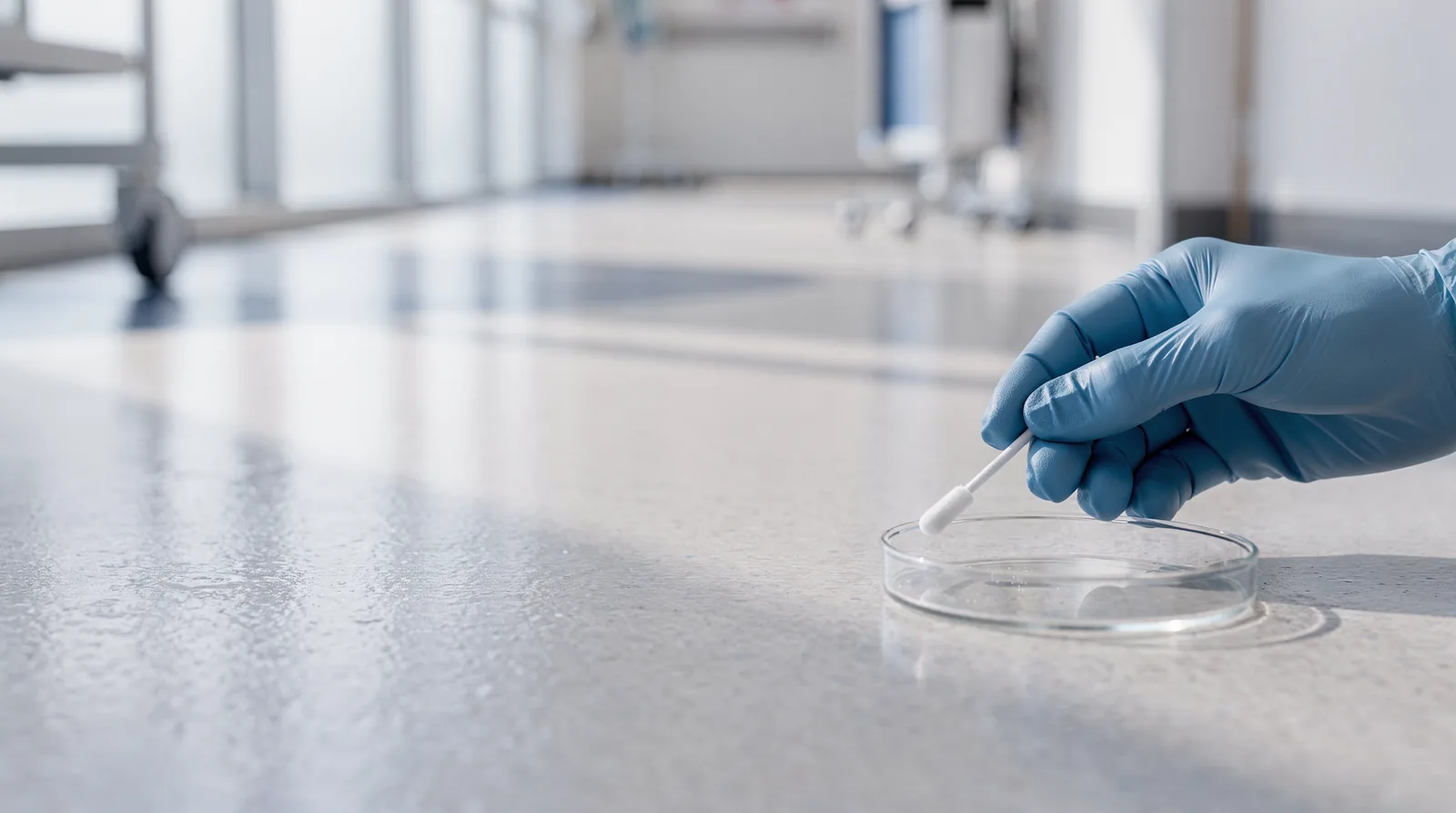
A truly antibacterial floor combines a sealed surface, an active bacteria-reducing agent and a finish that resists grime without needing harsh chemicals. Four separate properties have to work together, not just one coating sprayed on top.
The base requirement is physical. A floor only counts as genuinely hygienic flooring if it's sealed, non-porous, free of open joints, and cleanable with mild products rather than industrial-strength disinfectants. Grout lines, timber grain, and carpet fibers all give bacteria somewhere to hide, which is why fully sealed surfaces outperform them in everyday UK homes and workplaces.
Chemistry does the rest of the work. Antimicrobial flooring relies on active agents built into the surface layer that continuously reduce bacteria. Other microorganisms, rather than simply resisting spills. This is a different mechanism from a standard polish or sealant, which only blocks moisture and dirt rather than acting on living organisms.
Does Antibacterial Flooring Actually Stop Bacteria Growing?
Yes, when the finish is engineered for that purpose rather than marketed loosely. Genuine hygienic floor finishes are formulated specifically to inhibit the growth of bacteria, mould, and other microbes, not just to look clean on the surface. That distinction matters in care settings, kitchens, and bathrooms across the UK. Moisture and foot traffic create ongoing conditions for microbial growth.
Three elements separate a functionally antibacterial floor from one that merely claims to be:
- Surface technology that embeds active agents into the material itself, rather than a topical spray
- A sealed, joint-free structure that leaves no porous gaps for bacteria to colonise
- A cleaning routine that works with mild detergent, avoiding the need for aggressive disinfectants
Specifying a high grade of antibacterial flooring protects the health and safety of household members, staff, and customers in commercial UK spaces. Flooring that only looks hygienic, without these underlying properties, offers little real protection against day-to-day contamination.
How Does LVT Compare to Carpet and Wood?
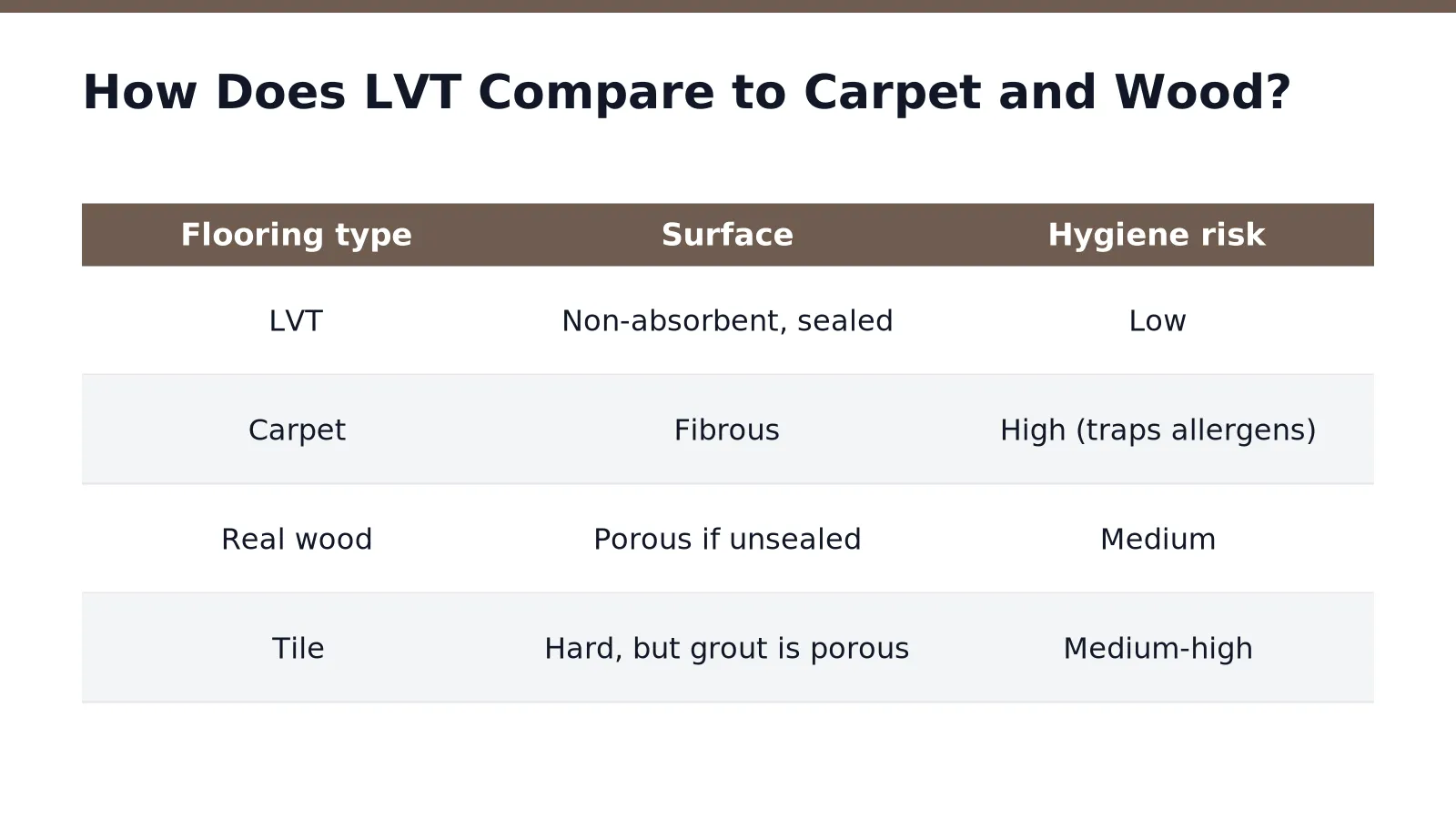
Luxury vinyl tile ranks as the standout hygienic flooring choice for UK homes, ahead of carpet, real wood, laminate and tile. Grout lines in tile trap grime that resists ordinary cleaning, while carpet fibers hold onto allergens long after vacuuming. Real wood, though durable, still relies on a porous surface that reacts to spills if left unsealed.
The gap comes down to surface technology. LVT combines a non-absorbent top layer, no fibers to trap allergens, and no porous grout lines, finished with a polyurethane coating that wipes clean using water and mild detergent. That construction is what makes LVT the practical default for households, clinics, and food-prep spaces that need low-maintenance, germ-resistant flooring.
| Flooring type | Surface | Hygiene risk | Cleaning effort |
|---|---|---|---|
| LVT | Non-absorbent, sealed | Low | Wipe clean |
| Carpet | Fibrous | High (traps allergens) | Vacuum + deep clean |
| Real wood | Porous if unsealed | Medium | Sweep + careful mopping |
| Tile | Hard, but grout is porous | Medium-high | Scrub grout lines |
Which flooring is best for allergy sufferers?
LVT suits allergy sufferers best because it has no fibers to trap dust, pet hair, or pollen. Carpet, by contrast, holds onto these particles between cleans, which keeps allergens circulating in the home. Sealed real wood performs reasonably well too, provided the finish stays intact.
Can old flooring still be hygienic?
Older carpet and unsealed wood lose hygienic performance over time as wear exposes fibers or bare timber. Replacing these with antimicrobial flooring restores a cleaner baseline. For residential settings, choosing products with enhanced antibacterial properties, and placing them where moisture and foot traffic are highest, keeps hygienic flooring performing as intended.
Where Are Antibacterial Coatings Used in the UK?
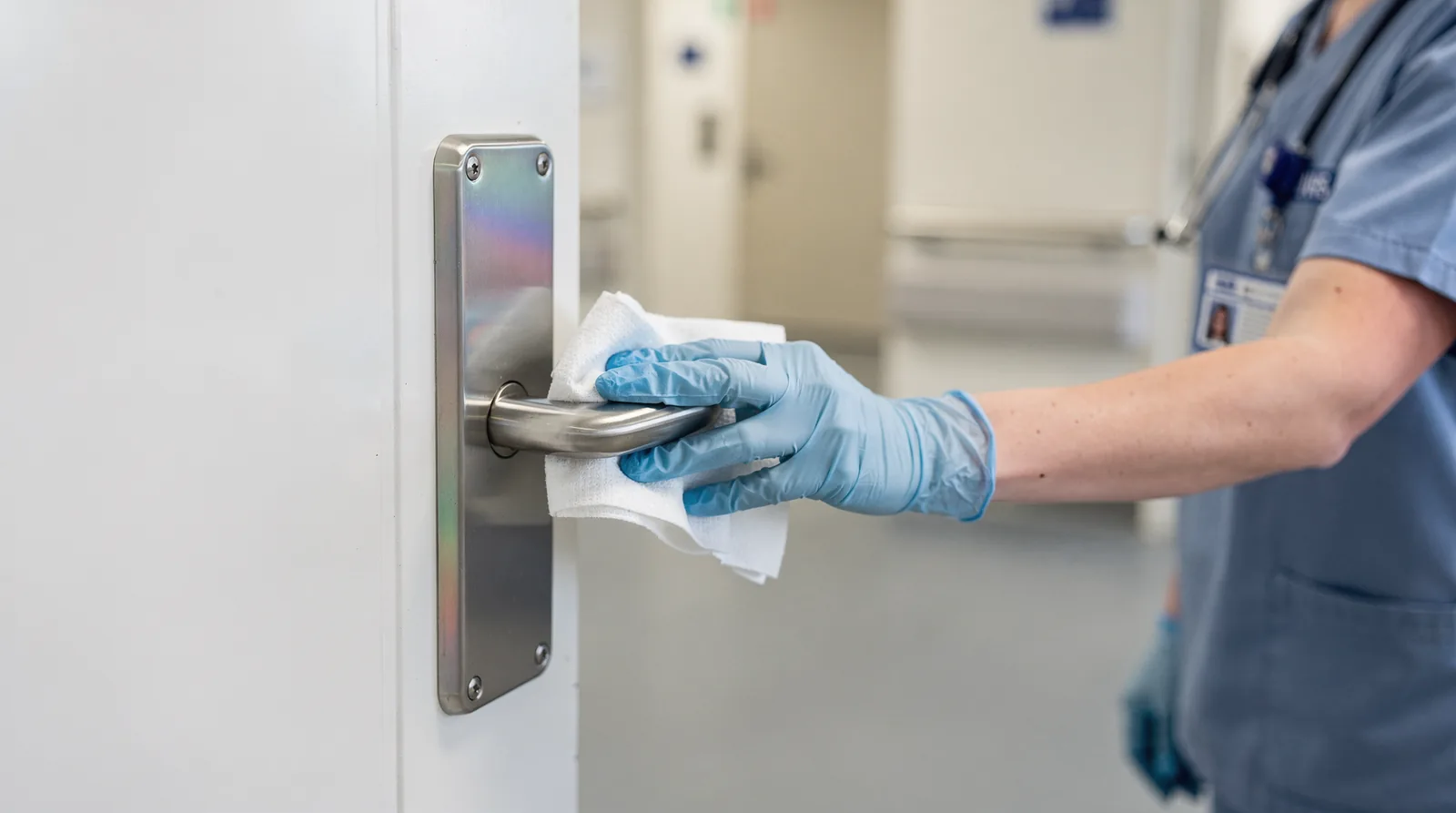
Healthcare facilities, food processing plants, schools and commercial kitchens account for the heaviest use of antibacterial floor coatings across the UK. High foot traffic and frequent contact with moisture, food residue or bodily fluids create conditions where bacteria multiply quickly, making these settings priority locations for protective surface technology.
The purpose goes beyond surface appearance. A properly specified coating adds a layer of defense against harmful pathogens, supporting a cleaner, healthier environment for staff, patients, pupils and customers alike. In food production and healthcare settings especially, this kind of hygienic flooring is essential for maintaining spaces that stay clean, safe and free from contamination.
Which UK sectors rely most on antibacterial flooring?
Four sectors dominate demand:
- Healthcare facilities: hospitals, clinics and care homes, where infection control is non-negotiable
- Food processing plants: environments requiring constant washdown and contamination prevention
- Schools: high-traffic spaces shared by large numbers of children and staff
- Commercial kitchens: areas combining heat, moisture and food handling, a combination that favors bacterial growth
Is antibacterial flooring only for industrial or clinical buildings?
No. Commercial spaces more broadly also specify these coatings, not just factories and hospitals. Antimicrobial flooring finishes are increasingly used wherever regulatory compliance, long-lasting protection and improved safety are priorities, which now extends to a wide range of UK commercial premises beyond strictly clinical or industrial settings.
Property managers weighing flooring for shared or public-facing spaces should treat hygiene performance as a specification requirement, not an afterthought.
How to Choose Hygienic Flooring for Your Space?
Selecting the right hygienic flooring starts with matching material properties to how a room gets used, then checking which products carry genuine antibacterial performance. A kitchen floor faces grease and spills; a hallway faces grit and footfall. Both demand surfaces that resist bacteria without constant deep-cleaning.
Buyers across the UK should confirm which products offer enhanced antimicrobial flooring properties before deciding where each material fits within a home or commercial space. Not every sealed surface performs equally once installed, so checking manufacturer claims against independent product information matters more than relying on appearance alone.
What flooring styles balance hygiene with looks?
Vinyl (LVT), SPC Click Vinyl, Engineered Wood, and Laminate all suit buyers weighing hygiene against style and budget. LVT and SPC Click Vinyl generally offer the most water-resistant, joint-free surfaces for kitchens and bathrooms. Engineered Wood and Laminate work well in living areas. Hallways where a natural look matters more than constant moisture exposure.
| Style | Best suited to |
|---|---|
| Vinyl (LVT) | Kitchens, bathrooms, high-traffic zones |
| SPC Click Vinyl | Wet rooms, commercial areas |
| Engineered Wood | Living rooms, bedrooms |
| Laminate | Hallways, dining rooms |
Should a sample be tested before buying?
Ordering a physical sample before purchase lets a buyer test real-world cleanability and surface feel firsthand. Photographs rarely reveal how a finish responds to a damp cloth or how textured a surface technology actually feels underfoot. Suppliers can typically despatch hygienic flooring samples and finished orders to homeowners and commercial property managers across the UK, making this kind of hands-on comparison straightforward regardless of location.
FAQ
Why is antibacterial flooring trending in UK homes?
Post-pandemic awareness of germs drives the shift, with cleanliness now ranking alongside style and durability. High-traffic areas like hallways and kitchens face daily contact with microorganisms, prompting households to prioritize hygienic surfaces.
What makes a floor count as truly hygienic?
A hygienic floor stays sealed, non-porous, and free of open joints, cleaning easily with mild products rather than industrial disinfectants. Active bacteria-reducing agents built into the surface layer continuously limit microbial growth, unlike standard sealants.
Is antibacterial flooring only necessary for commercial spaces?
No, demand spans residential, commercial, and industrial settings alike. Manufacturers supplying the UK market now build surface technology to reduce microbial presence in everyday homes, not just specialist facilities.
Conclusion
In closing, antibacterial flooring represents a practical response to heightened hygiene awareness in UK homes and workplaces. The technology delivers genuine benefits for households with vulnerable occupants. Realistic expectations matter, these surfaces complement rather than replace standard cleaning routines. As consumer demand for health-conscious interiors continues, antibacterial options remain a legitimate consideration within the broader flooring landscape, particularly for kitchens, bathrooms, and high-traffic areas where bacterial growth poses genuine concern.


About The Author