Magnetic Flooring: Could Glue and Click Systems Become Obsolete?
Magnetic Flooring vs Traditional Installation Methods
Magnetic flooring eliminates glue fumes and avoids weak click-joints, fitting over existing subfloors without disruption. SPC click vinyl and vinyl (LVT) ranges offer durable, straightforward click installation, giving buyers options to compare before deciding.
Magnetic flooring systems bond planks to a magnetic underlayment without adhesives, nails, or click-lock joints, cutting installation downtime and toxic fume exposure. Glue-down vinyl, such as Lusso Portofino herringbone LVT, suits underfloor heating but demands drying time. Click systems risk cracking under pressure or shifting subfloors.
Key Takeaways
- Magnetic flooring eliminates messy adhesives and toxic fumes associated with traditional glue installation methods.
- Click systems prove fragile and prone to cracking, whereas magnetic technology offers superior durability.
- A range of styles, including SPC click vinyl, laminate, engineered wood, and solid oak, can be paired with different installation methods.
- Installation method choice affects renovation timelines, reversibility, and long-term durability as much as the flooring material itself.
What Is Magnetic Flooring and How Is It Installed?
Magnetic flooring is a system that uses magnets to secure planks, rather than relying on glue or a fixed adhesive bond. This approach to installation swaps mess and permanence for a connection that can be lifted and replaced when needed. For property developers and DIY enthusiasts, that shift counts as a real innovation in how floors get laid.
The mechanics stay fairly simple. A magnetic underlayment sits across the subfloor, and specially designed floor planks click into place above it. Together, the underlayment and planks form a secure bond without adhesives, nails, or the usual complications of a traditional fit.
Homeowners planning a flooring project can currently pair this method with several material options, including:
- Herringbone
- Engineered wood
- Vinyl (LVT)
- Laminate
- Solid oak
- SPC click vinyl
These styles are among the choices generally available for an installation project. Among real wood options, engineered wood remains the most popular pick, valued for its authentic wood appearance along with durability and stability that outperform many hardwood alternatives.
Does magnetic flooring damage the subfloor?
No drilling or gluing touches the subfloor directly; the magnetic underlayment becomes the working surface instead. Planks lock onto that underlayment rather than into the floor beneath. This reduces exposure to adhesives or fasteners throughout the installation process, which matters for anyone wary of permanent fixings.
How Does Magnetic Flooring Compare to Glue-Down Installation?
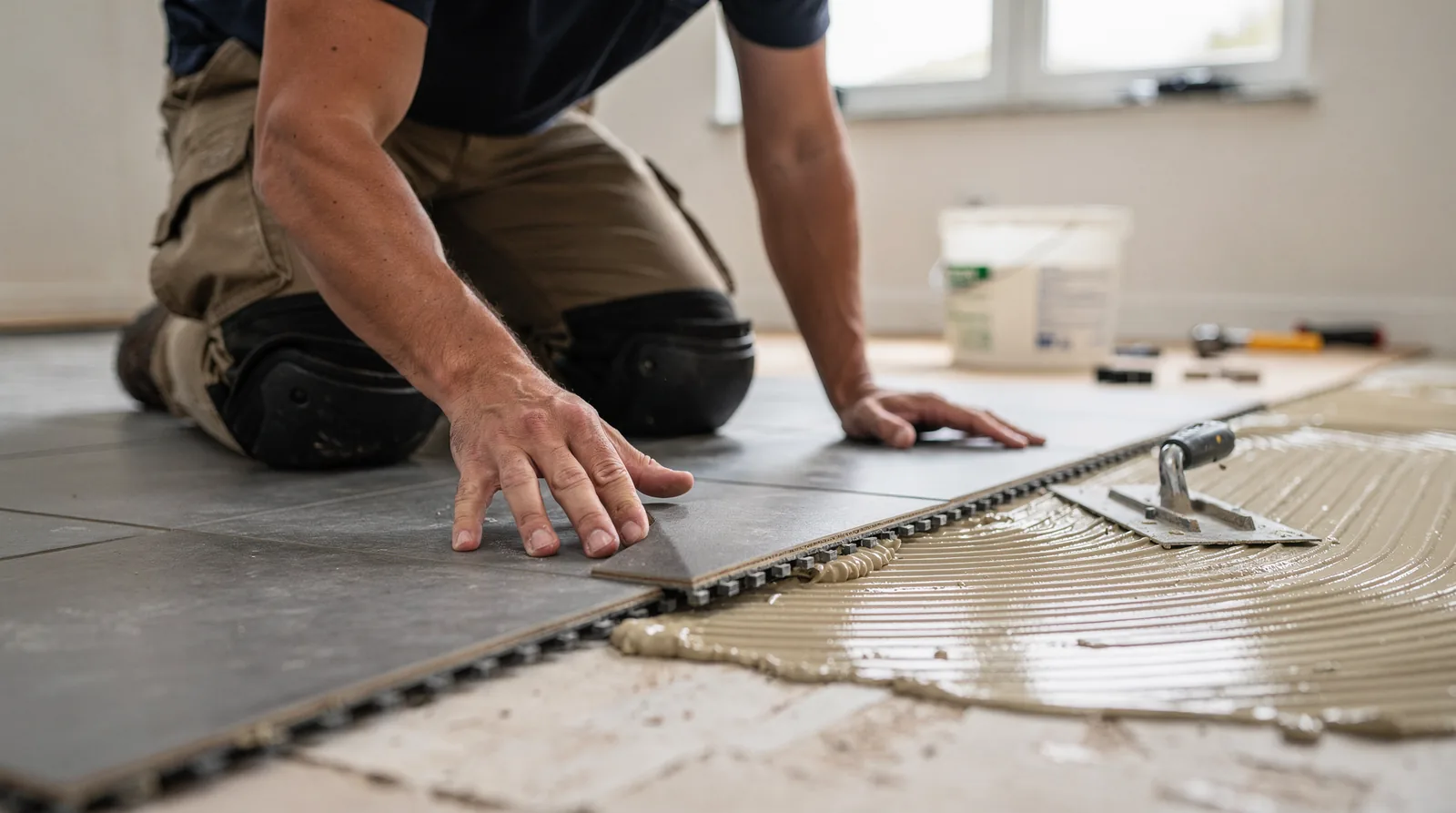
Magnetic flooring uses a magnetic underlayment paired with compatible planks, holding a floor in place without wet adhesive. Glue-down installation, by contrast, relies on adhesives that create a fixed, permanent bond between the planks and the subfloor. That bond cannot be reversed without significant effort once it cures.
Glue-down projects also carry operational costs beyond the material itself. Adhesive-based methods can cause significant downtime on a renovation or commercial fit-out. Rooms often stay unusable until the glue sets. Fumes released during application pose a further concern, particularly in occupied homes or offices with limited ventilation.
| Factor | Magnetic Flooring | Glue-Down Installation |
|---|---|---|
| Bonding method | Magnetic underlayment | Chemical adhesive |
| Fume exposure | None described | Present during curing |
| Reversibility | Designed for easy adjustment | Permanent bond |
| Typical disruption | Lower | Higher, due to drying time |
Is Glue-Down Flooring Still Worth Considering?
Glue-down remains a practical choice for certain engineered wood floors. A multi-layered construction gives these products the strength needed for high-traffic rooms, including hallways and living rooms. Thicker engineered boards can also improve insulation, helping a room stay warmer and quieter, which matters in frequently used living spaces.
Which Method Suits Renovation Timelines Better?
Projects on tight schedules generally favor methods that avoid curing time and fume clearance. Since magnetic systems skip wet adhesive entirely, rooms typically return to use faster. For property developers juggling multiple units, that speed represents a meaningful innovation over adhesive-dependent workflows, even though glue-down construction still has structural advantages worth weighing against the project's timeline.
How Does Magnetic Flooring Compare to Click Systems?
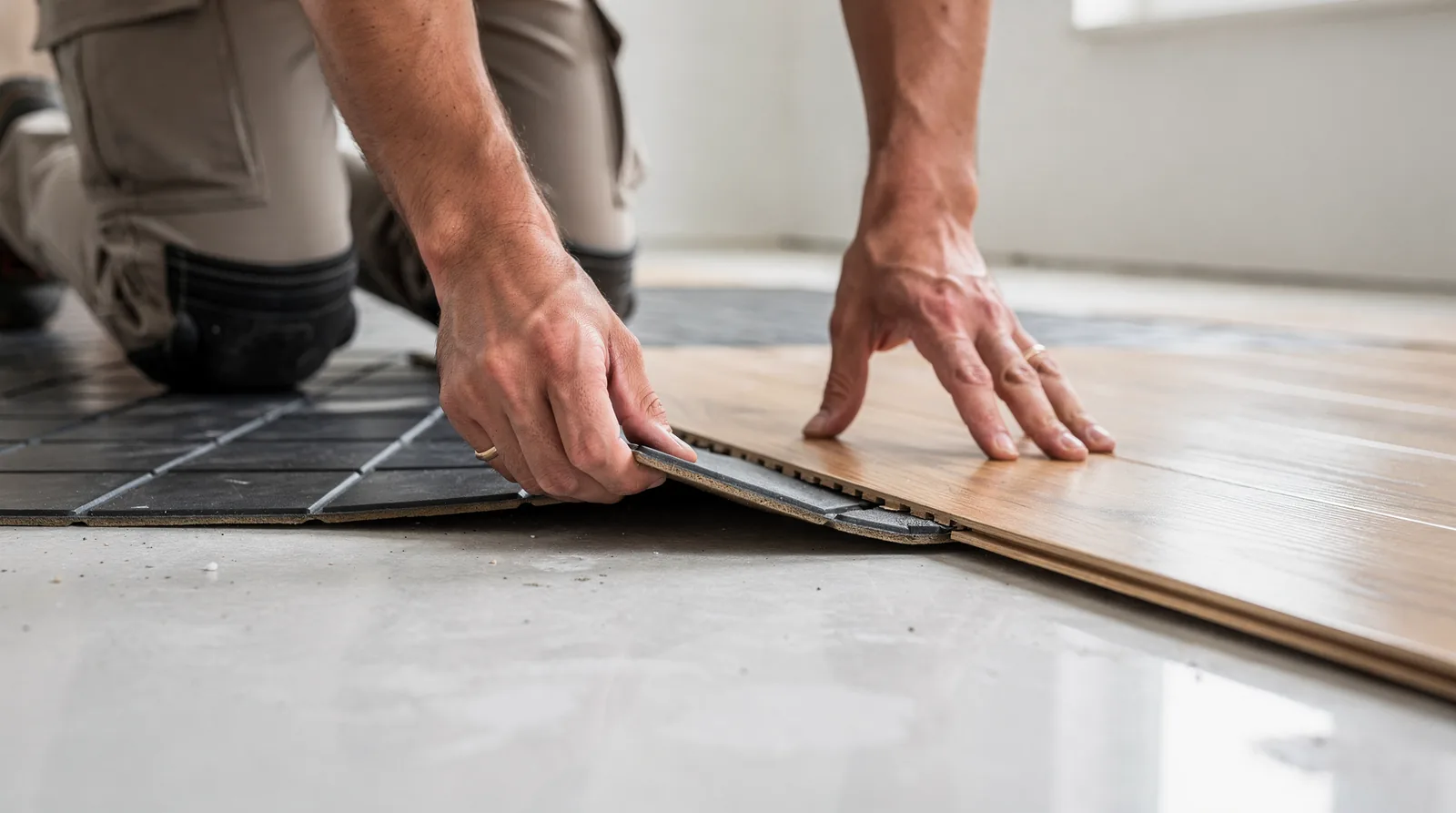
Magnetic flooring replaces mechanical joints with a magnetized backing layer that pairs with a receptive underlayment, while click systems rely on interlocking tongue-and-groove edges to hold planks together. The difference matters: click-lock joints can crack under repeated stress, especially in busy households or commercial spaces with heavy foot traffic. Magnetic systems avoid that mechanical connection entirely, which removes one common point of failure.
Click-lock flooring isn't obsolete, though. SPC click vinyl remains a popular floating, interlocking option for homeowners and developers who want a straightforward, tool-light installation. It just carries different trade-offs than a magnetic setup.
Is magnetic flooring more durable than click vinyl?
Durability depends on use case rather than a blanket rule. Click-lock joints face physical stress every time planks shift or flex, which is where cracking risk originates. Magnetic systems sidestep that specific failure point since there's no interlocking edge to fatigue over time.
Can click systems and magnetic flooring use the same subfloor prep?
Not always. Magnetic flooring needs a compatible underlayment to create the bond. Click systems typically float over standard underlayment without that requirement.
| Factor | Click-Lock Systems | Magnetic Flooring |
|---|---|---|
| Joint type | Tongue-and-groove | Magnetized backing + underlayment |
| Cracking risk | Present under stress | Reduced, no mechanical joint |
| Subfloor needs | Standard underlayment | Specific receptive underlayment |
Herringbone engineered wood flooring, which blends solid wood's look with engineered construction, offers a stable base suited to either click or glue-based fitting. This flexibility reflects the broader innovation reshaping how flooring gets specified, not just installed, across both residential and commercial projects, a shift worth noting for anyone comparing options across today's flooring market.
What Installation Benefits Does Magnetic Flooring Offer?
Magnetic flooring removes adhesives, nails, and click-lock fragility from the fitting process. A magnetic underlayment pairs with purpose-built planks, creating a secure bond without mess, fumes, or lengthy downtime. For property developers and renovating homeowners, that shift changes how quickly a room returns to use.
Industry commentary frames this approach as more than a product swap. Flooring specialists describe it as a shift in how design. Fitting are approached together, rather than a new material layered onto old methods. That framing matters because installation now shapes design choice from the outset, not after planks are already down.
Compare that against established systems. Herringbone engineered wood, often prized for its extensive range of parquet-style designs, still relies on glue-down or click methods that commit a floor to its subfloor. Engineered wood more broadly already proves itself in heavy-footfall commercial settings such as shops, cafes, restaurants, and bars, showing durability and frequent fitting cycles aren't mutually exclusive.
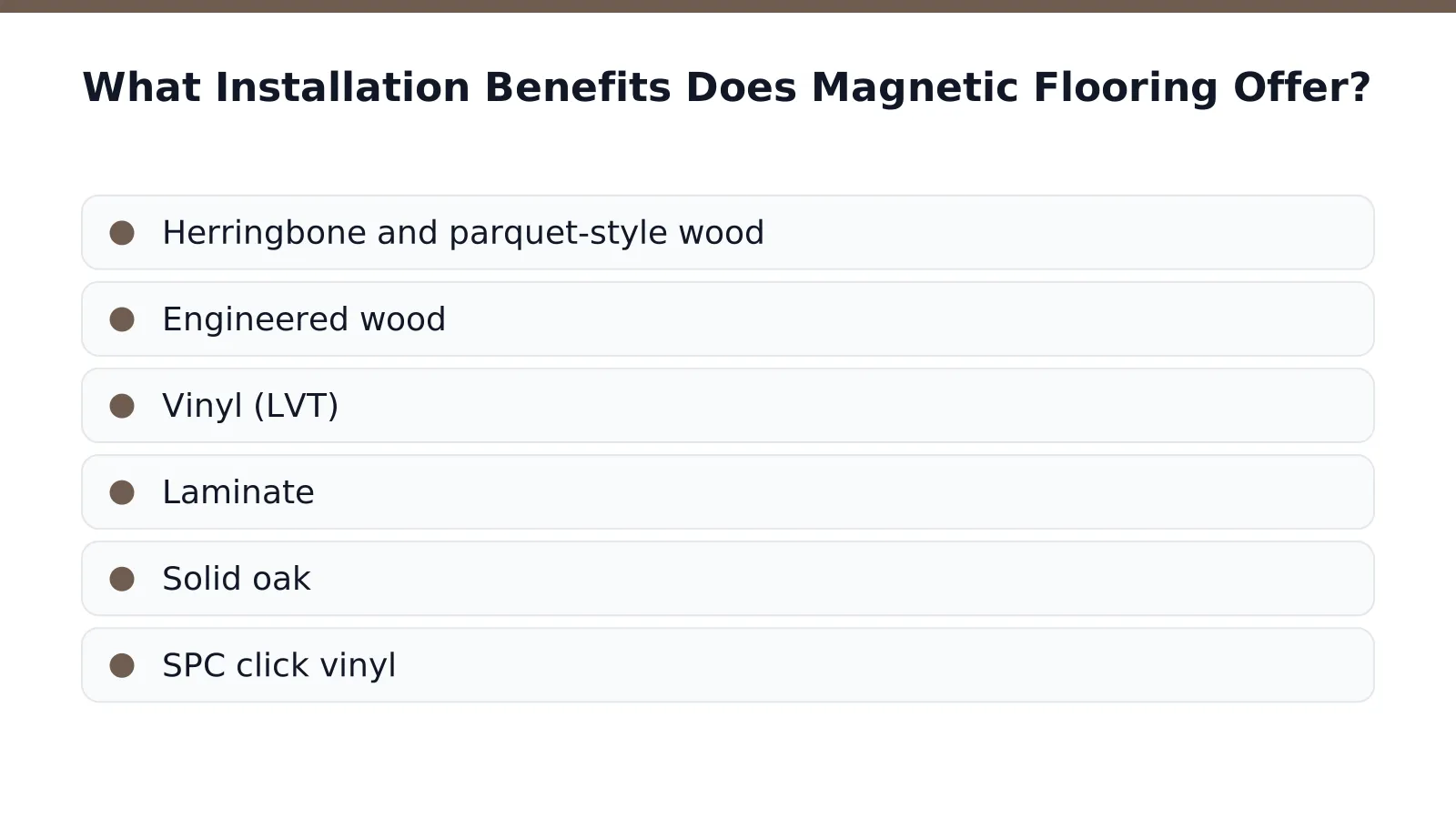
The wider market reflects this diversification. Options now span:
- Herringbone and parquet-style wood
- Engineered wood
- Vinyl (LVT)
- Laminate
- Solid oak
- SPC click vinyl
This full spread gives developers and designers a baseline against which magnetic systems can be judged on fitting speed and flexibility rather than material alone. Each format carries its own method, and magnetic systems stand apart by avoiding permanent fixing altogether.
Does Magnetic Flooring Work With Existing Subfloors?
Magnetic underlayment systems sit over a prepared subfloor without adhesive bonding, which is what allows planks to elevator and relocate later. This suits renters, commercial tenants, and developers staging multiple units who need flooring that doesn't commit a space permanently.
Is Magnetic Flooring a Genuine Innovation or a Niche Trend?
Commentary from flooring specialists positions the method as a genuine innovation in fitting methodology, not a cosmetic variation on existing planks. The core change sits in how the floor meets the subfloor, which affects renovation timelines more than it affects appearance.
Is Magnetic Flooring Right for Your Project?
Suitability comes down to priorities: permanence versus flexibility, and how soon a space might change again. Magnetic flooring suits projects expecting future reconfiguration, while engineered wood herringbone suits those chasing long-term character and visual depth.
Property developers and commercial designers often weigh the same factors homeowners do. Buyers typically look for a floor that delivers luxury, durability, and affordability together, whether fitting a home office or a retail showroom. Neither system compromises on all three, but each reaches them differently.
Engineered wood herringbone achieves durability through layered construction. The engineered structure resists warping and wear, while a genuine oak veneer adds depth and natural variation. Each plank is crafted individually, showcasing rich texture and vibrant color that give a room a sense of craftsmanship.
Magnetic flooring takes a different route. Rather than gluing or nailing planks down, a magnetic underlayment creates a strong yet flexible connection to the subfloor. That flexibility makes installation faster and reversible, a genuine innovation for pop-up retail, rental properties, or any space where permanent fixing isn't practical.
Does magnetic flooring work for rental properties?
Yes. Because the underlayment holds planks magnetically rather than permanently, floors can be lifted and relaid without damaging the subfloor. That reversibility benefits landlords and tenants who need adaptable spaces without long-term commitment.
Which option offers more visual character, magnetic or engineered wood?
Engineered wood herringbone generally offers richer character, since genuine oak veneer brings natural grain and color variation to every plank. Herringbone collections show how that craftsmanship reads in a finished room, compared with the more uniform look of magnetic systems.
| Factor | Engineered Wood Herringbone | Magnetic Flooring |
|---|---|---|
| Visual character | Natural oak veneer, grain variation | Pattern-dependent, uniform |
| Flexibility | Fixed, long-term | Reversible, adaptable |
| Install method | Traditional fitting | Magnetic underlayment |
FAQ
Does magnetic flooring damage the subfloor?
No drilling or gluing touches the subfloor directly, as the magnetic underlayment becomes the working surface. Planks lock onto that underlayment rather than into the floor beneath, reducing exposure to adhesives or fasteners during installation.
How does magnetic flooring compare to glue-down installation?
Magnetic flooring uses a magnetic underlayment with compatible planks, holding the floor in place without wet adhesive. Glue-down installation relies on adhesives that create a fixed, permanent bond, which cannot be reversed without significant effort once cured.
What flooring styles work with magnetic installation?
Homeowners can pair magnetic installation with herringbone, engineered wood, vinyl (LVT), laminate, solid oak, and SPC click vinyl. These styles are among the choices generally available for an installation project.
Conclusion
In closing, the choice between magnetic, glue, and click systems depends on your priorities: magnetic flooring offers unmatched convenience and reversibility, glue delivers permanence and stability for high-traffic areas. Click systems balance ease of installation with reliable performance. Each method suits different circumstances, budgets, and long-term plans. Assess your space's demands, installation timeline, and whether you may need to remove or replace flooring later to determine which approach aligns best with your requirements.


About The Author