The Technology Fighting the Biggest Problem With Wood: Movement
Key Takeaways
- Engineered wood flooring moves significantly less than solid boards through seasonal humidity changes.
- Cross-laid plywood cores hold real wood apartment throughout temperature and moisture fluctuations.
- Real wood flooring technology now delivers durability without sacrificing authentic wood appearance and feel.
- Engineered wood options combine genuine hardwood with stable core construction for lasting performance.
Why Does Real Wood Flooring Move at All?
Real wood flooring moves because planks absorb moisture from humid air. Release it when conditions turn dry, causing the boards to swell and shrink. This constant exchange, known as wood movement, explains why gaps appear in winter and boards feel tight in summer. For UK homeowners running underfloor heating, understanding this process matters more than cosmetics. Unmanaged movement risks cupping, peaking, or warping that no amount of refinishing can fully reverse.
Why Is Wood Described as Hygroscopic?
Wood is hygroscopic, meaning its cell walls continuously absorb and release water vapor until the timber settles into balance with the surrounding air. Flooring professionals call this balance point the equilibrium moisture content. As indoor humidity shifts between heating. Summer months, the wood's moisture content chases that moving target, never quite standing still.
This ongoing exchange is normal, not a defect. Expansion gaps, acclimatisation periods before fitting, and humidity-controlled rooms all exist to manage it, not eliminate it.
Does Every Type of Wood Floor Move the Same Amount?
No. Solid hardwood, cut from a single piece of timber, moves considerably more than engineered flooring, which bonds a real wood veneer to a cross-layered core. That layered construction resists the swelling and shrinking that plagues solid boards, giving engineered options a meaningful edge in dimensional stability.
For properties with underfloor heating or fluctuating humidity, such as open-plan kitchens or converted period homes, engineered construction offers a more predictable outcome. The surface still looks and feels like genuine timber. The core resists seasonal distortion far better than solid wood left to its own devices.
How Does Engineered Flooring Limit Seasonal Movement?
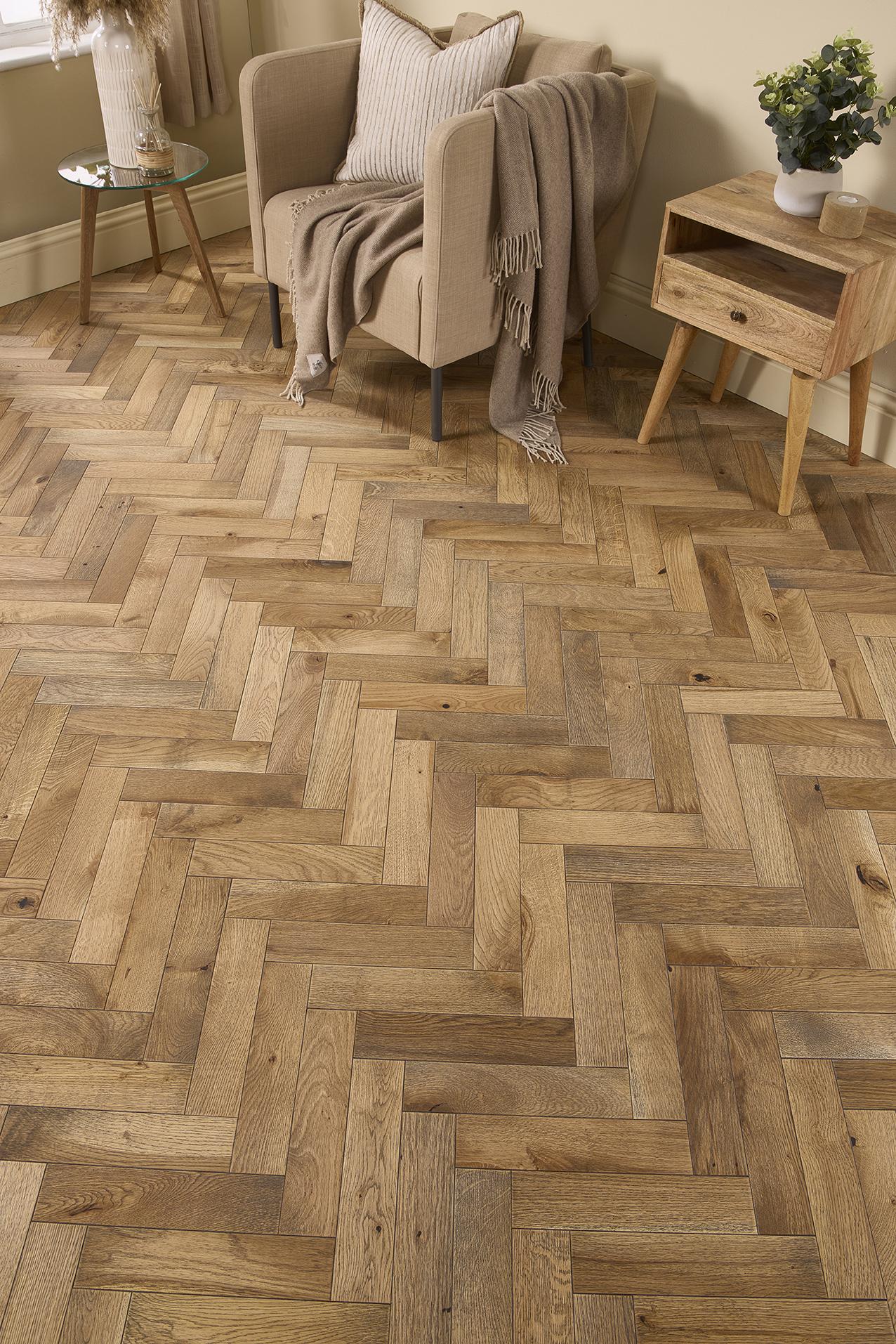
Engineered flooring limits seasonal movement through its layered build. A real wood veneer sits bonded to a cross-laid core, usually plywood, and that core holds the plank apartment as humidity rises and falls through the year. Solid wood lacks this backing, so it swells and shrinks far more visibly across the seasons.
This construction directly addresses wood movement, the natural expansion and contraction that occurs as timber absorbs and releases moisture from the air. Each layer in an engineered board runs in a different grain direction. That cross-grain structure resists the pulling and twisting forces that cause gapping, cupping, or warping in a single solid plank.
The multi-layered design also brings practical strength to rooms that take a beating. Hallways, living rooms, and other high-traffic areas benefit from this added durability. The core adds rigidity beneath the decorative wood surface. Herringbone and parquet-style engineered boards rely on the same principle: the engineered structure delivers stability. Durability, while a real oak veneer still gives each plank natural character and grain variation.
Does engineered wood flooring still move at all?
Some movement still happens, even with a stable core. No wood product is entirely immune to humidity changes. The layered construction keeps that movement to a minor, manageable degree rather than the pronounced shifts seen in solid boards.
Dimensional stability is the term flooring professionals use for this resistance to shrinking and swelling. It's a key reason engineered boards suit rooms with fluctuating humidity:
- Bathrooms and kitchens, where moisture levels shift daily
- Rooms above underfloor heating, which dries the air further
- Properties without consistent year-round climate control
Buyers weighing real wood options in these conditions should treat dimensional stability as a central factor, not an afterthought.
What New Core Technologies Boost Dimensional Stability?
Dimensional stability now owes as much to core engineering as to the wood species itself. Compressing real hardwood under controlled pressure creates a denser board that resists swelling and shrinking far more effectively than untreated timber. This process, often marketed as densified wood, produces a next-generation hardwood floor built from genuine timber but with markedly improved durability and water resistance.
Core innovation doesn't stop at compression. Manufacturers have also developed engineered flooring constructions with non-wood cores. Moisture-blocking installation systems, specifically designed to stop water vapor from reaching the timber layer. These enhancements target the exact mechanism behind wood movement: moisture absorption that causes planks to expand, cup, or gap over time.
Can engineered wood handle underfloor heating without warping?
Some engineered and laminate floors are manufactured specifically for underfloor heating compatibility, including certain herringbone laminate ranges built with heat-stable cores. These products undergo construction choices that limit expansion as temperatures rise and fall throughout the day. Homeowners and developers planning underfloor heating should always confirm compatibility before installation rather than assuming a standard engineered board will perform the same way.
| Core Innovation | Primary Benefit |
|---|---|
| Densified hardwood compression | Improved water resistance and durability |
| Non-wood or hybrid cores | Resistance to moisture vapor incursion |
| Underfloor-heating-rated cores | Stability under fluctuating temperatures |
| Moisture-control installation systems | Reduced risk of gapping and cupping |
For buyers comparing options, various suppliers offer engineered ranges that reflect several of these core advances. Product specifications should always be checked against the intended room conditions, including humidity levels and heating type, before committing to a purchase.
Which Installation Methods Prevent Gaps and Warping?
Correct fitting technique, not the wood species itself, determines whether a floor stays apartment through the seasons. Tongue-and-groove remains the standard method for engineered wood, locking each plank into its neighbor along a milled edge. Some modern products instead rely on a click system, which snaps boards together without glue or nails along the joint. The right technique depends on the specific product, so installers should always check manufacturer instructions before fitting begins.
Wood movement happens regardless of installation method, since timber expands and contracts as humidity shifts through the year. Good installation practice manages that movement rather than fighting it.
Three fitting details separate a stable floor from one that eventually gaps or cups:
- Expansion gaps: Spacers set around the room's perimeter leave room for the floor to expand without pressing against walls or cabinetry.
- Underlay: Every engineered board needs a suitable underlay layer beneath it, cushioning the floor and helping it sit evenly across the subfloor.
- Moisture-managing adhesives: Specialist hardwood adhesives combine tri-linking bonding technology with built-in moisture vapor control and a sound reduction membrane, addressing dampness rising from the subfloor before it reaches the planks above.
Why does engineered flooring resist warping better than solid wood?
Engineered flooring uses a cross-layered core bonded beneath a real wood veneer, which restrains the natural pull of the grain in different directions. This construction gives the floor far greater dimensional stability than a solid plank of the same species, so it stays flatter across changing indoor humidity.
Does skipping an expansion gap really matter?
Yes. Without a gap, swelling boards have nowhere to go and push against each other, which forces the surface to bow upward. A gap left by spacers during fitting absorbs that seasonal swelling safely.
Which Flooring Options Suit UK Underfloor Heating?
Engineered wood, SPC click vinyl and laminate generally pair best with underfloor heating systems, thanks to their layered construction and improved dimensional stability. Solid oak and thick herringbone formats need more caution, since uneven heat exposure encourages wood movement across the boards. Property developers and renovators weighing up options should match the floor type to the room's heating demands before fitting begins.
A broad range of styles exists for UK buyers, each with a different stability profile:
- Herringbone
- Engineered wood
- Solid oak
- Laminate
- Vinyl (LVT)
- SPC click vinyl
Some of these tolerate temperature swings far better than others, which matters most in kitchens and bathrooms where heat cycles happen daily.
Is engineered wood flooring good for underfloor heating?
Engineered wood flooring suits underfloor heating in most UK homes, particularly in thicker constructions. These thicker boards add a layer of insulation, keeping rooms warmer and quieter underfoot while still conducting heat effectively. The multi-layer build also resists the warping that solid wood often shows when exposed to constant, low-level heat.
Can engineered wood handle busy, high-traffic rooms with heating installed?
Durability plays a role here too. Engineered wood's structure holds up under heavy footfall, a trait already proven in commercial spaces like cafes and shops. For hallways, kitchens and open-plan living areas sitting above underfloor heating, that same resilience helps the floor perform under daily pressure.
FAQ
What causes wood movement in real wood flooring?
Wood is hygroscopic, so planks absorb moisture from humid air and release it when conditions dry out. This constant exchange causes swelling and shrinking, leading to gaps in winter and tight boards in summer.
Why does engineered wood flooring resist movement better than solid wood?
Engineered flooring bonds a real wood veneer to a cross-laid plywood core, with each layer running in a different grain direction. This structure resists the pulling and twisting forces that cause gapping, cupping, or warping.
Some movement still happens because the wood veneer remains hygroscopic. However, the cross-laid core holds the plank apartment through seasonal humidity changes, limiting movement far more than solid hardwood.
Conclusion
In closing, modern stabilization technologies have fundamentally shifted how solid wood flooring performs in variable moisture environments. Acclimation protocols, engineered construction methods, and moisture-barrier treatments work together to minimize the cupping, crowning, and gapping that once made real wood unpredictable. While wood movement remains an inherent characteristic of the material, these advances allow homeowners to install authentic hardwood with significantly greater confidence in long-term dimensional stability.


About The Author