


How One Plank Can Now Contain Several Different Materials
Key Takeaways
- Modern planks combine multiple materials, vinyl, wood, and laminate, into single flooring units for versatility.
- Modern flooring ranges span styles such as Engineered Wood, Vinyl, and SPC Click Vinyl, each suited to different durability, budget, and aesthetic needs.
- Multi-material planks eliminate compromise between durability, aesthetics, and budget across different home zones.
What Are Multi-Material Flooring Planks?
Multi-material flooring planks combine two or more layers of different substances, such as wood veneer, plastic polymer, or fiberboard, into a single board. Rather than relying on one solid material throughout, each plank stacks distinct layers to balance appearance, strength, and stability. This approach forms the basis of what's often called composite flooring, where manufacturing blends materials rather than cutting a single piece from one source.
The construction method matters more than it might seem. Engineered wood, for example, uses a multi-layered design that builds strength and durability for high-traffic rooms like hallways and living rooms. That same principle applies across other plank types, though the specific materials change.
What materials make up a typical multi-material plank?
Composition varies by product type, but most multi-material planks draw from a short list of common materials:
- Wood veneer, layered over a core for an authentic surface appearance
- Plastic polymers, including acrylic and PVC, used in vinyl plank construction
- Engineered cores, which add stability beneath the visible top layer
Vinyl plank flooring, for instance, is made almost entirely from plastic, typically a blend of acrylic, PVC, and similar polymers, giving it a synthetic base rather than a wood one.
Why do manufacturers layer different materials together?
Layering exists to solve problems a single material can't address alone. This multilayer flooring approach is central to engineered wood's popularity as a real-wood option: layering delivers an authentic wood appearance while improving durability and dimensional stability compared with solid hardwood.
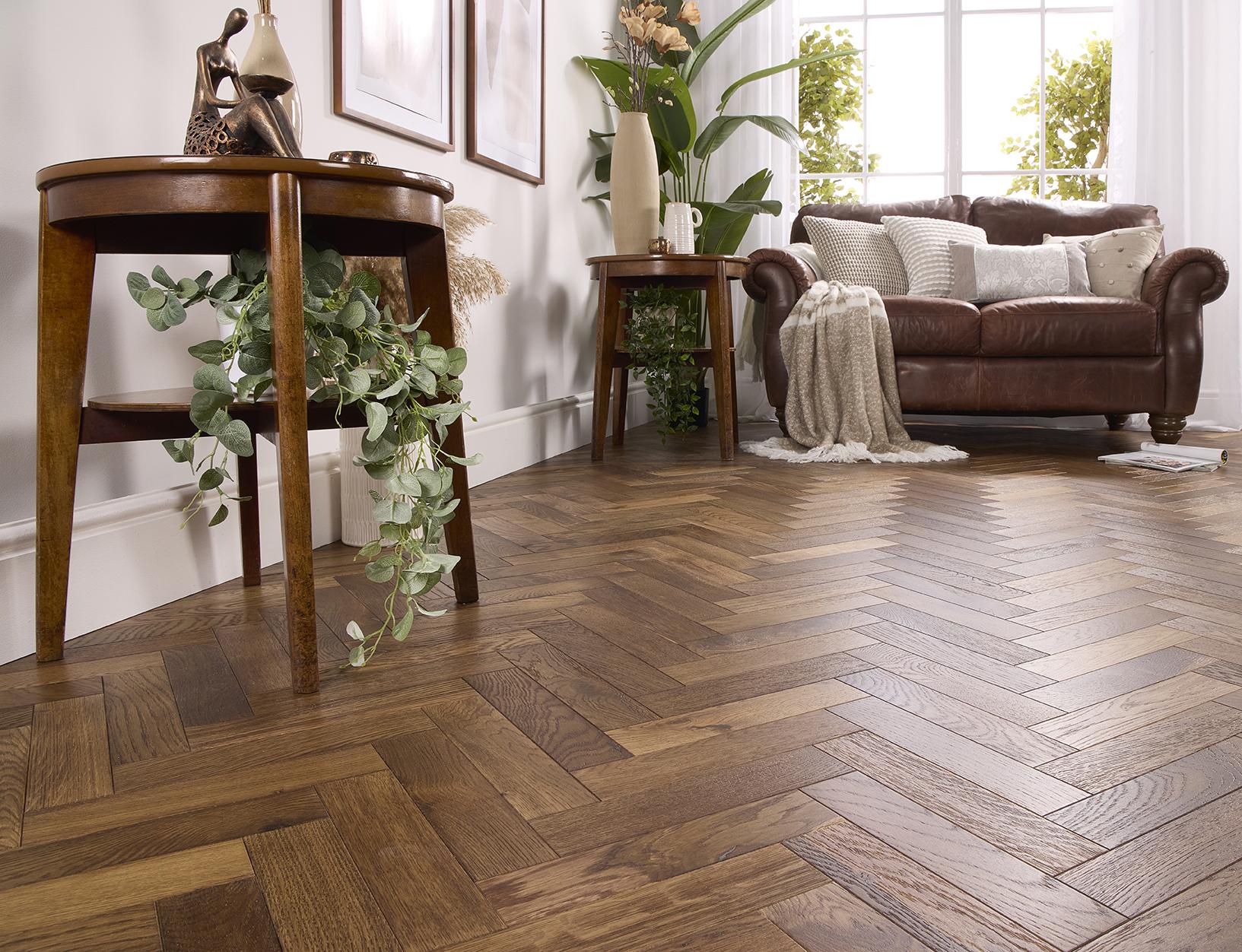
Herringbone-style engineered planks illustrate this well, pairing the visual character of solid wood with the layered flooring construction techniques that modern manufacturing makes possible.
How Is Multilayer Flooring Constructed?
Multilayer flooring gets its strength from an engineered core, with a decorative layer bonded on top for appearance. This two-part build, often called flooring construction, separates the structural job from the visual one. Each layer does a specific task rather than trying to do both.
The core sits at the heart of the plank. An engineered core structure gives multilayer flooring planks their stability and durability, resisting movement that solid wood often struggles with. Above that core, a real wood veneer provides the look, giving each floor character without compromising the base's strength.
What Makes the Top Layer of Multilayer Flooring Look Natural?
The surface layer is shaped specifically to show off grain and tone. Manufacturers craft each plank so the wood's natural texture. Color variation come through clearly, adding a sense of richness that apartment, uniform surfaces lack. This is the layer homeowners actually see and walk on daily.
Thickness matters beyond looks, too. Thicker multilayer builds can improve a room's insulation, helping spaces feel warmer underfoot and quieter when footsteps or furniture move across them. For renovators converting cold rooms or ground-floor spaces, this detail carries real weight.
How Is Composite Flooring Fitted?
Installation methods vary depending on the build. Composite flooring made from vinyl supports several fitting approaches, giving installers flexibility based on subfloor and budget:
- Adhesive: bonded directly to the subfloor for a permanent fit.
- Peel-and-stick: pre-applied backing simplifies DIY installation.
- Click-lock: planks interlock without glue, suited to floating floors.
Each method affects how the finished floor performs underfoot and how easily it can be replaced later. The choice should match the room's traffic and moisture exposure.
Which Materials Combine in Composite Flooring Planks?
Composite flooring planks blend several construction methods rather than following one fixed formula. The range spans herringbone, engineered wood, vinyl (LVT), laminate, and SPC click vinyl, each built from different layered materials. The term composite flooring covers this variety because no single material defines the category.
Vinyl plays a central role in many composite builds. Made from plastic layers, usually acrylic, PVC, and similar polymers, vinyl delivers scratch resistance, stain resistance, and a fully waterproof surface. Those qualities come from the way the plastic layers sit together, a structure that makes vinyl both durable and comparatively low-cost to produce.
Engineered wood takes a different approach to multilayer flooring, stacking several layers to create strength without sacrificing a natural wood appearance. This layered flooring construction isn't limited to residential settings.
Is Engineered Wood Suitable for Commercial Spaces?
Yes. The layered build gives engineered wood enough structural stability for high-footfall environments. Shops, cafes, restaurants, and bars all benefit from the combination of visual warmth and durability that this construction provides.
What Makes Vinyl a Practical Composite Material?
Vinyl's plastic composition handles moisture, scuffs, and stains better than many single-material alternatives. That performance, paired with a lower cost base, explains why vinyl appears so often in composite plank designs.
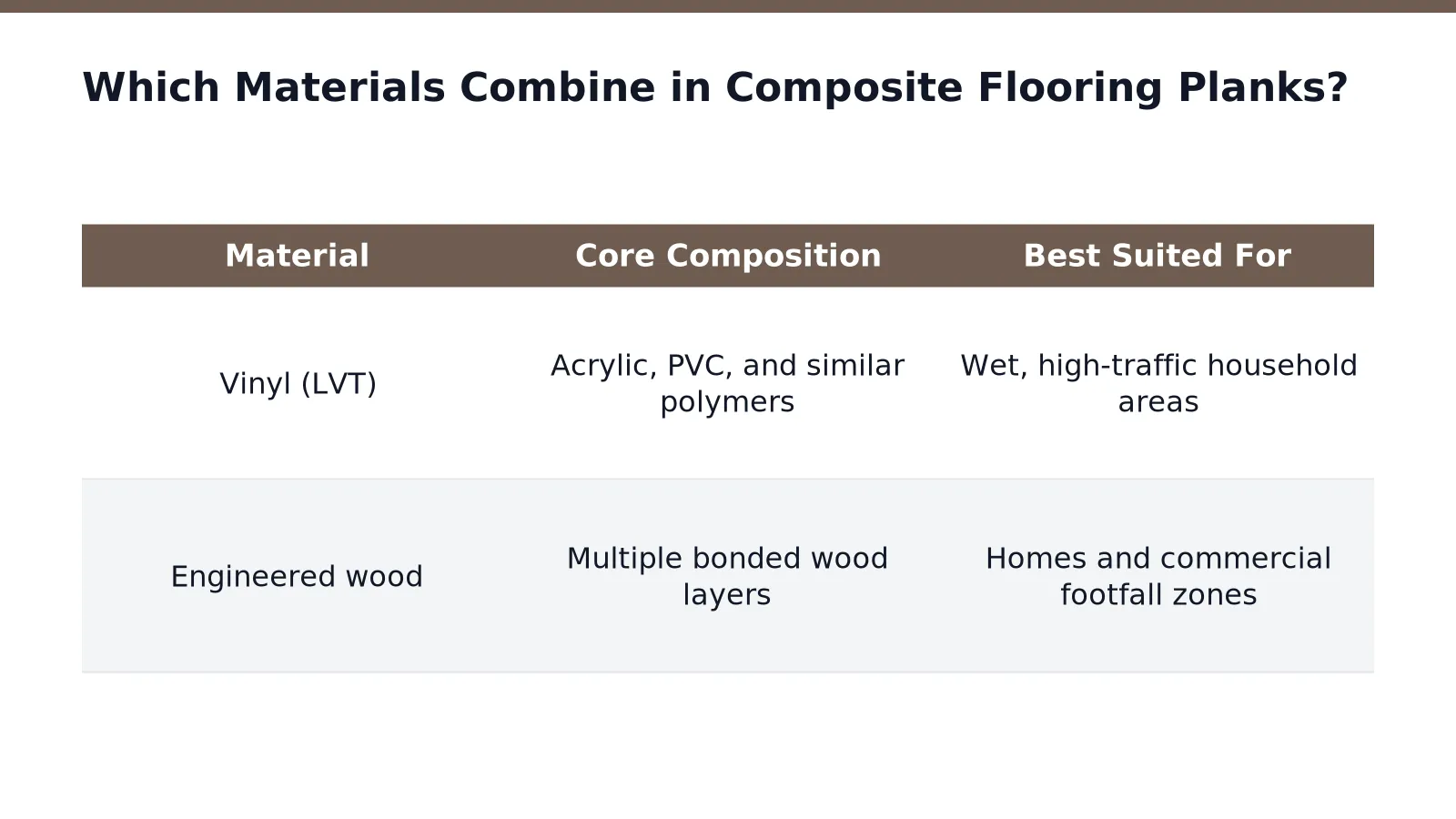
Comparing the two illustrates how differently "composite" can apply:
| Material | Core Composition | Best Suited For |
|---|---|---|
| Vinyl (LVT) | Acrylic, PVC, and similar polymers | Wet, high-traffic household areas |
| Engineered wood | Multiple bonded wood layers | Homes and commercial footfall zones |
Each material reaches durability through a distinct route, proving composite construction is a category of methods, not a single recipe.
Can You Mix Flooring Types Without Clashing?
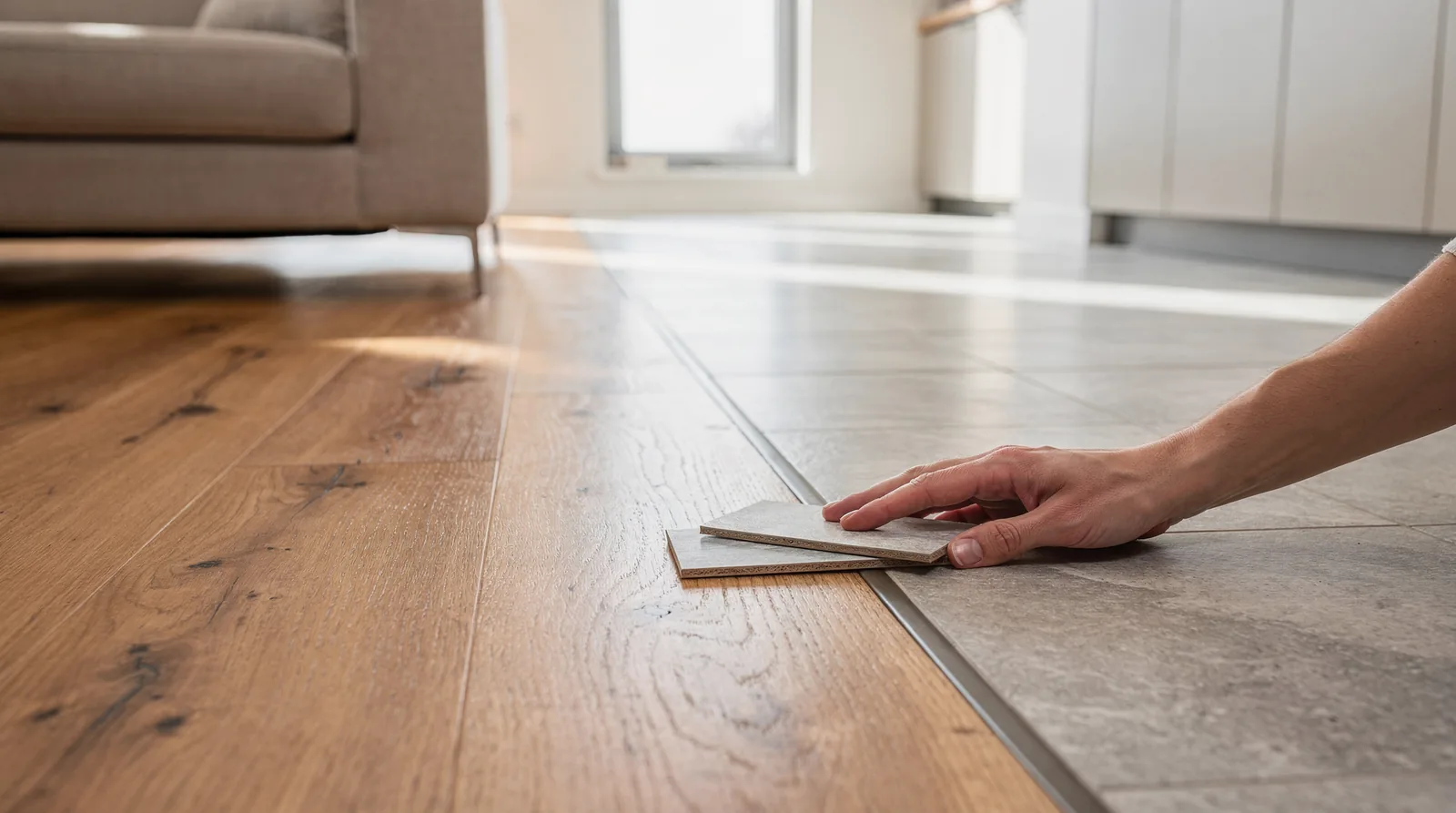
Yes, mixing flooring types works when each material is matched to the room's actual demands rather than chosen on looks alone. Clashing happens when transitions feel random, not when a home uses more than one surface. A wood-look floor in the living room. Tile in the kitchen can read as deliberate design, not a mismatch, provided the switch happens at a logical boundary like a doorway or change in function.
The strongest layouts follow use, not trend. Hardwood belongs where warmth underfoot matters most, tile suits areas where water and mud track in, and carpet earns its place where quiet is the priority. That logic, more than color-matching, is what separates a planned scheme from an accidental one.
Composite flooring and engineered wood both bring something useful to this mix. Herringbone-style engineered wood combines solid wood's appearance with layered, modern flooring construction, giving the stability needed when it sits next to tile, vinyl, or another material in the same open-plan space.
Does vinyl need different upkeep when paired with wood or laminate?
Vinyl sections require the same routine care as any other household surface to stay visually consistent with neighboring materials. A moist microfiber mop used once or twice a week keeps vinyl zones looking even next to wood or laminate flooring.
Where should transitions between flooring types sit?
Transitions work best at natural breaks, doorways, cabinetry lines, or changes in room function, rather than mid-room.
| Material | Best placement |
|---|---|
| Hardwood/engineered wood | Living areas, bedrooms |
| Tile | Entryways, kitchens, bathrooms |
| Carpet | Bedrooms, quiet living spaces |
| Vinyl/multilayer flooring | Utility rooms, hallways |
Should Every Room Use the Same Flooring?
No single rule dictates whether every room in a house needs matching flooring. The right answer depends on personal style, budget, and the daily rhythm of the household. A family with children and pets lives very differently on its floors than a couple working from home.
Consistency has a clear upside. Running one flooring material through a home extends a chosen color scheme from room to room, giving the whole space a more pulled-together, cohesive look. That visual flow is why many renovators default to uniform flooring before considering anything else.
Does Mixing Flooring Types Cause Problems?
Mixing isn't automatically risky, but it does raise practical questions worth settling early. Cost, maintenance, and how different materials meet at doorways all factor into the decision alongside style preference.
What Should Influence the Final Choice?
A few practical questions help narrow things down:
- Style: Does the home read better with one continuous material, or does each room call for something different?
- Budget: Can the household stretch to premium flooring everywhere, or does mixing allow spending more where it matters most?
- Lifestyle: Do high-traffic zones like kitchens and hallways need tougher materials than bedrooms or studies?
Composite flooring, often produced using multilayer flooring construction, is a common choice for rooms needing durability. Products built on this type of flooring construction sometimes carry a guarantee tied to proper care, which is worth weighing against the appeal of a single material running through the whole house.
FAQ
What materials typically combine in a single flooring plank?
Multi-material planks combine wood veneer, plastic polymers like acrylic and PVC, and engineered fiberboard cores into one unit, balancing appearance, strength, and stability rather than relying on a single material throughout.
Why do manufacturers layer different materials instead of using one?
Layering solves problems a single material can't fix alone, giving engineered wood an authentic appearance while improving durability and dimensional stability compared with solid hardwood, especially in high-traffic areas.
Which flooring styles use this multi-material construction?
Flooring styles built on this principle include Engineered Wood, Vinyl (LVT), and SPC Click Vinyl, each separating the structural core from the decorative top layer for performance and looks.
Conclusion
In closing, multi-material planks represent a significant shift in flooring design, allowing manufacturers to combine the aesthetic appeal of natural wood with the durability and moisture resistance of synthetic layers in a single product. This innovation expands the practical applications of flooring across diverse environments, from kitchens. Bathrooms to commercial spaces, without requiring consumers to compromise on either appearance or performance. As technology continues to refine these composite constructions, multi-material planks are becoming an increasingly viable option for those seeking versatility and longevity in their flooring choices.


