What Your Flooring Will Look Like After 100,000 Footsteps
Heavy foot traffic changes both the look and performance of floors over time. Knowing how common materials respond to wear — and which upkeep routines slow that wear — helps homeowners and property managers make smarter choices. This guide walks through what floors typically look like after roughly 100,000 footsteps, the wear patterns to watch for, and practical maintenance tips to keep surfaces looking and working their best.
Which Flooring Materials Hold Up Best Under Heavy Use?
Picking the right material matters when you expect a lot of foot traffic. Durability ratings summarize how well each flooring type resists wear, so they’re a useful starting point for both homes and commercial spaces.
How Do Durability Ratings Stack Up for Popular Floor Types?
Durability ratings help compare how different floors perform under constant use. Below is a quick look at common options:
| Material | Durability | Estimated Lifespan |
|---|---|---|
| Hardwood | Moderate | 25-100 years* |
| Vinyl | High | 10-20 years |
| Laminate | Moderate | 15-25 years |
| Tile | Very High | 50+ years |
In short: hardwood offers long-term appeal but needs care, while tile and vinyl are generally better suited to constant traffic thanks to their tougher surfaces.
What Are the Main Pros and Cons of Hardwood, Vinyl, Laminate, and Tile?
Each material brings trade-offs. Match those to how the space will be used and how much time you’ll spend on maintenance.
-
Hardwood: Pros: Timeless look, boosts resale value, can be refinished to restore appearance.
Cons: Vulnerable to scratches and water damage without proper care. -
Vinyl: Pros: Water-resistant, easy to install, low day-to-day upkeep.
Cons: Can dent or scratch; colors may fade over many years. -
Laminate: Pros: Affordable, tough surface resistant to scratching, simple to clean.
Cons: Limited to panel replacement rather than full refinishing; can feel noisy underfoot. -
Tile: Pros: Extremely durable, resists water, and is low-maintenance.
Cons: Feels cold to the touch and can crack if hit by very heavy objects.
Weighing these pros and cons against traffic patterns and aesthetics will steer you toward the right choice for each room.
What Wear-and-Tear Patterns Appear After 100,000 Steps?
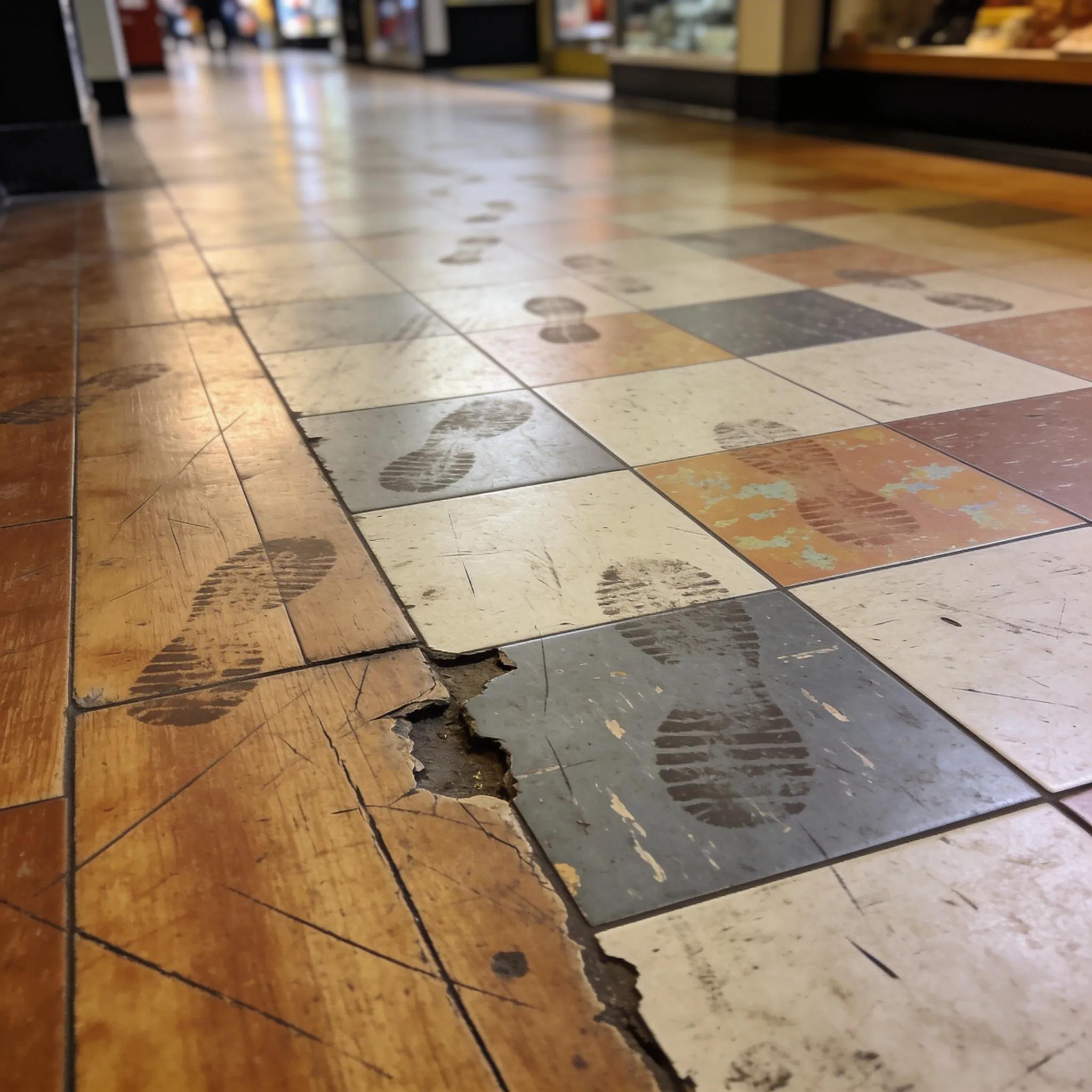
Foot traffic produces predictable damage over time. Spotting these patterns early lets you apply targeted maintenance before problems deepen.
How Does Traffic Volume Affect Surface Damage?
More traffic usually means more visible wear. In commercial and busy residential areas you’ll often see:
- Deep scratches and scuff marks
- Faded or discolored zones
- Changes in texture — for example, shiny streaks on an otherwise matte finish
These signs help you decide when to repair, refinish, or replace a surface.
What Visual Clues Reveal Aging and Abrasion?
Common indicators of aging include:
- Scratches and scuffs: Especially apparent on hardwood and laminate from abrasive contact.
- Faded spots: Loss of sheen from sun exposure or constant footfall.
- Uneven surfaces: Bumps or dips that can stem from poor installation or subfloor issues.
Recognizing these clues early makes maintenance more effective and less costly.
How Can You Extend Flooring Life Under Heavy Use?
Consistent care and a few protective measures will noticeably slow wear. Below are practical steps that pay off over time.
Which Maintenance Steps Most Effectively Prevent Damage?
Routine actions that reduce wear include:
- Frequent cleaning: Sweep or vacuum to remove grit, then mop with a suitable cleaner.
- Use of mats: Place entry mats and runners to catch dirt and moisture before it reaches the floor.
- Right products: Use cleaners and treatments designed for the specific flooring material to avoid harm.
These simple habits preserve both appearance and performance under heavy traffic.
How Maintenance Affects Life-Cycle Cost and Environmental Footprint
Maintenance routines have a major effect on both the environmental impact and the total cost of flooring over its life. For environmental metrics, adding intensive maintenance can raise scores by about 31% for hardwood and as much as 114% for carpet. A sensitivity analysis shows vacuuming is a primary driver of this increase. From a cost perspective, maintenance drives up the total ownership expense — roughly 49% of total costs for hardwood and around 30% for linoleum, vinyl, and carpet. The assumed service life of a building strongly influences the best flooring choice, since both costs and environmental scores shift over time. For example, analyses often use an assumed service life of 61 years for a residential structure.Impact of maintenance on life cycle impact and cost assessment for residential flooring options, 2015
Which Accessories and Finishes Help Floors Last Longer?
To protect surfaces, consider these common solutions:
- Surface finishes: A durable urethane or similar topcoat on hardwood adds a protective barrier.
- Area rugs and runners: Place them in high-traffic zones to absorb wear before it hits the floor.
- Furniture pads: Felt or rubber pads under legs prevent scratches when furniture moves.
These simple additions create a buffer that extends the life and look of your floors.
How to Choose Flooring for High-Traffic Commercial or Residential Spaces
Choosing wisely requires balancing durability, upkeep, and cost to match how the space will be used.
Which Flooring Options Deliver the Best Value and Durability?
Solid choices for high-traffic settings include:
- Luxury vinyl tile: Gives the look of natural materials with strong wear resistance.
- Porcelain tile: Very durable and low-maintenance.
- Laminate: Cost-effective with good scratch resistance for busy areas.
These materials strike a good balance between style, durability, and long-term value.
How Do Maintenance Needs Affect Your Flooring Decision?
Maintenance requirements should weigh heavily in your decision. Consider:
- High-maintenance options: Hardwood needs regular care but can be refinished and offers classic appeal.
- Low-maintenance solutions: Vinyl and tile cut down on cleaning time and long-term upkeep.
Factoring in maintenance expectations helps avoid surprises and ensures the floor meets day-to-day needs.
Frequently Asked Questions
1. How do I pick the best flooring for a specific high-traffic area?
Match the flooring’s durability rating and maintenance profile to how the space will be used. Heavy equipment or constant footfall calls for tougher materials like porcelain tile, while family homes often benefit from luxury vinyl for its balance of durability and easy care. Also weigh aesthetics and budget when making your final choice.
2. What is the typical lifespan of different flooring types with regular use?
Lifespan varies by material and upkeep. With proper care, hardwood can last 25 to 100 years, vinyl about 10 to 20 years, laminate roughly 15 to 25 years, and tile often exceeds 50 years. Regular maintenance can extend these ranges.
3. Can laminate or vinyl be refinished or repaired?
Laminate and vinyl usually can’t be refinished like hardwood. Laminate panels can often be swapped out individually, while vinyl damage may require patching or replacing sections. Hardwood, by comparison, can be sanded and refinished multiple times to renew its surface.
4. What preventive steps keep floors looking their best?
Keep floors clean of grit, use rugs or runners in busy zones, apply appropriate finishes, and use furniture pads under heavy pieces. These preventive steps help preserve appearance and reduce the need for more invasive repairs.
5. How does foot traffic change the look of flooring over time?
Frequent use can cause scratches, scuffs, loss of sheen, and uneven wear. Sunlight exposure can fade colors, and repeated contact may change surface texture. Regular inspections let you catch and address these issues before they worsen.
6. Are there eco-friendly flooring choices that withstand heavy traffic?
Yes. Bamboo, cork, and recycled rubber are durable, sustainable options. Bamboo can be harvested responsibly and is quite strong; cork offers resilience and shock absorption; recycled rubber is durable and slip-resistant — all suitable for busy spaces and kinder to indoor air quality.
7. What are the cost implications of maintaining different flooring types?
Maintenance costs vary. Hardwood often carries higher upkeep costs — maintenance can approach 49% of total ownership expenses — while vinyl and tile usually require less frequent care, lowering long-term costs. Consider cleaning supplies, likely repairs, and any future refinishing when calculating total cost of ownership.
Conclusion
Knowing how different floors wear and how to care for them makes a big difference in longevity and appearance. Choose materials that match your traffic levels, use practical protections, and stick to a regular maintenance routine to protect your investment. For deeper guidance and specific product recommendations, explore our full resources and planning checklists.


About The Author