What Would a Zero-Glue Flooring Industry Look Like?
Homes fitted entirely with SPC Click Vinyl and engineered wood click systems, eliminating adhesives, fumes, and lengthy cure times. Click flooring systems are a modern solution for adhesive-free installations.
Key Takeaways
- A zero glue flooring industry prioritizes click-lock and SPC vinyl systems, eliminating adhesive-based installation methods entirely.
- Glue-free flooring reduces VOC emissions and chemical off-gassing, creating healthier indoor environments for residential and commercial spaces.
- Click-lock installation systems enable faster, cleaner flooring installation without adhesive residue or extended curing times between rooms.
What Is Adhesive-Free Flooring, Exactly?
Adhesive-free flooring describes planks or tiles that lock together mechanically rather than bonding to the subfloor with wet glue. Click flooring mechanisms allow boards to interlock edge-to-edge, creating a floating floor that sits on top of the subfloor rather than fixed to it. The category spans several materials, not just one product type.
Click-style options now include SPC click vinyl alongside laminate and engineered wood, giving buyers a genuine style range to choose from rather than a single niche product. This matters for anyone comparing looks: a herringbone pattern or a stone-effect tile can usually be found in both glued and click formats.
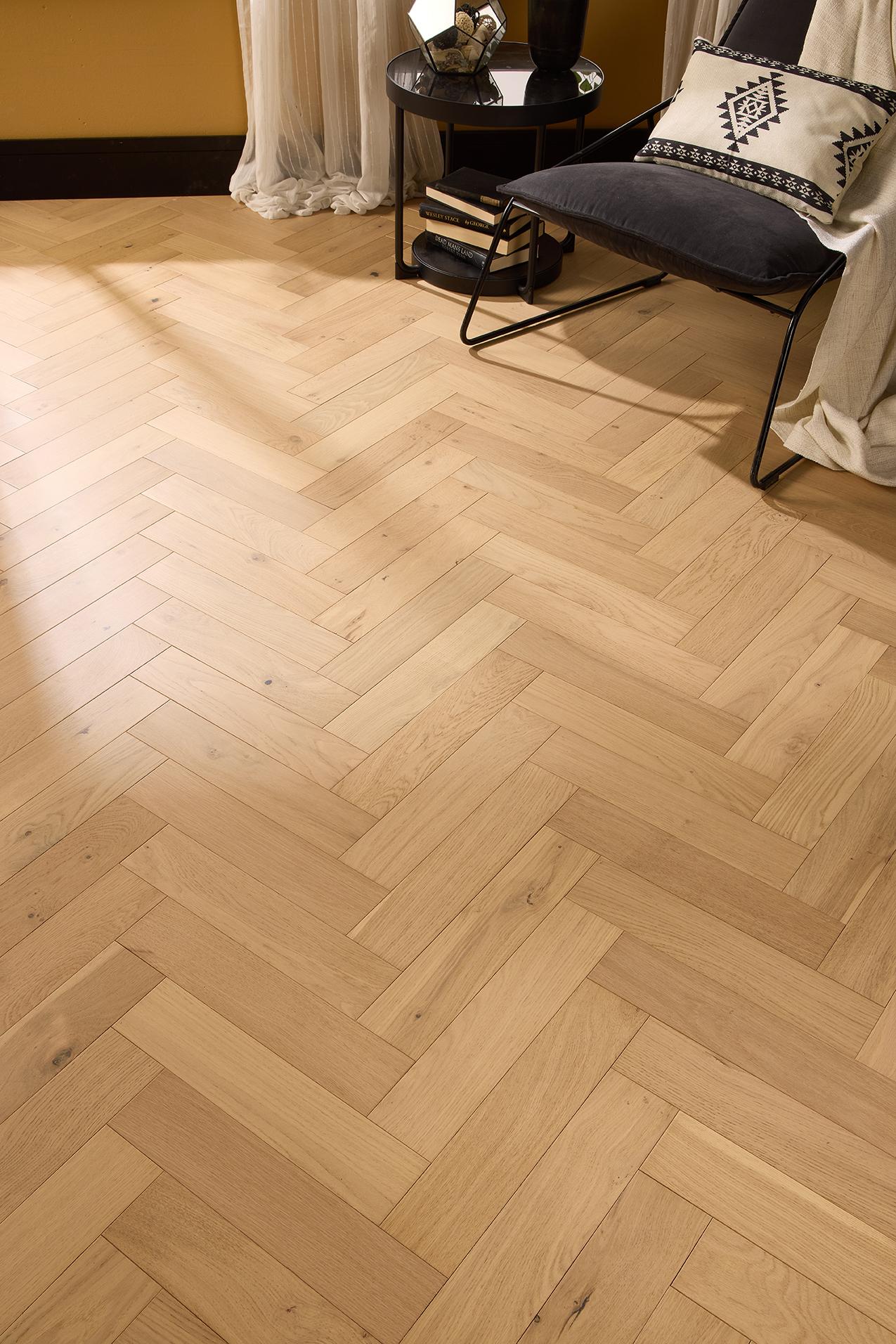
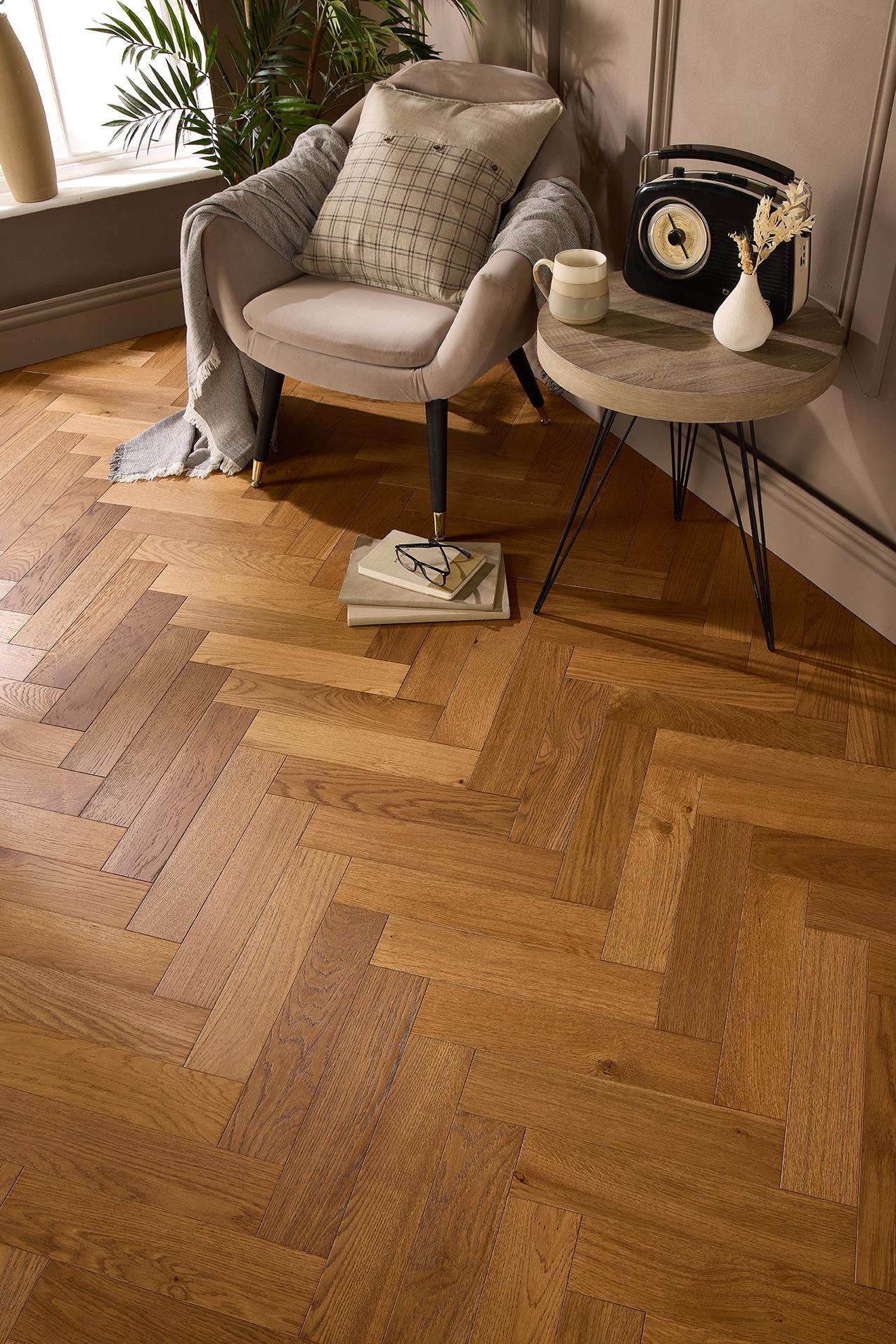
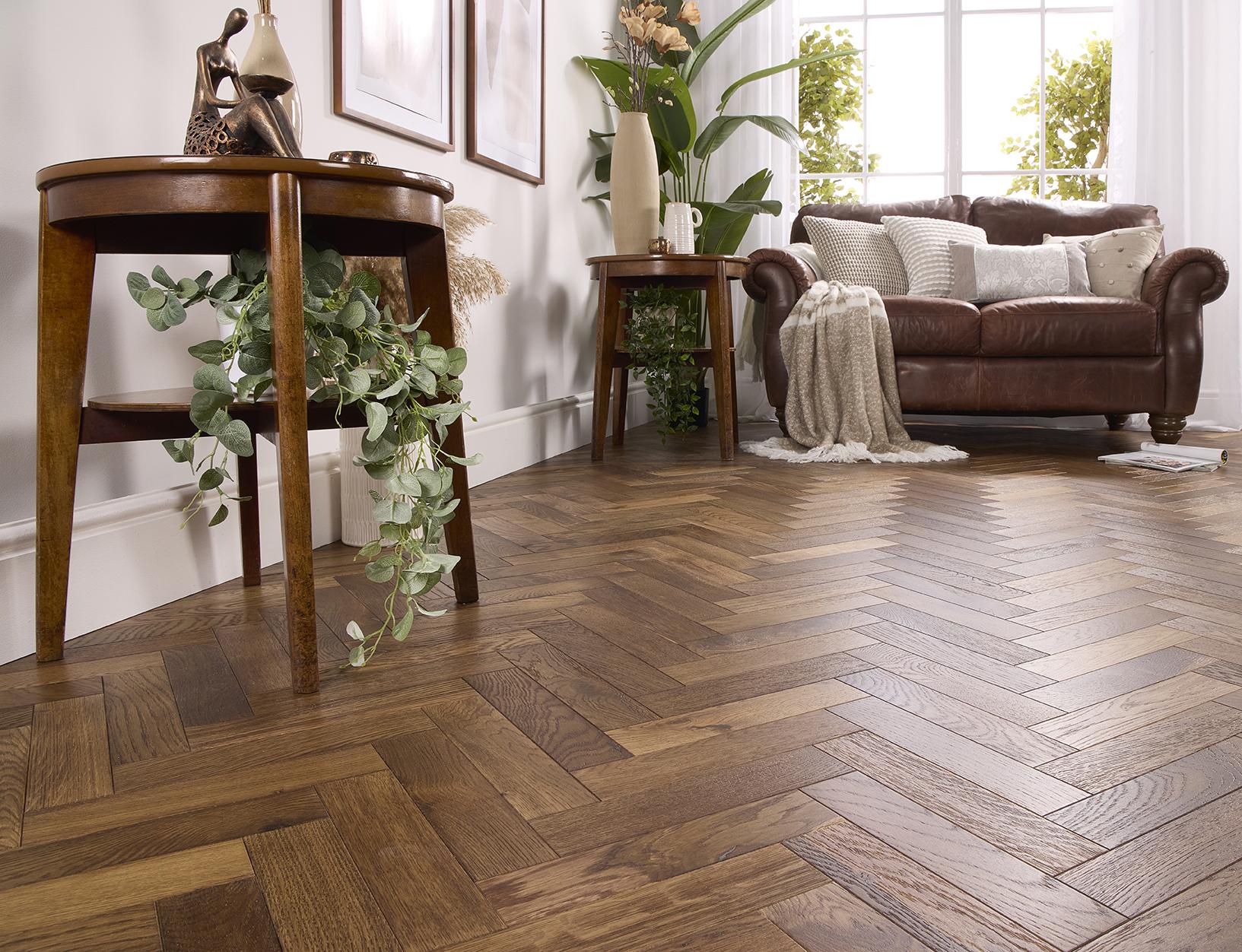
Engineered wood illustrates why glue-free doesn't mean lower quality. Its layered structure, typically a real wood veneer bonded to a stable core, delivers strength and durability regardless of how the planks meet the floor beneath. Herringbone engineered wood takes this further, combining a traditional parquet look with construction methods that reduce dependence on wet adhesives during fitting.
Why Do People Choose Glue-Free Options?
Fumes from wet adhesives trigger genuine reactions in sensitive households, and this is a documented reason buyers seek alternatives. Forum discussions among flooring installers describe household members reacting to adhesive smells long after application, sometimes more acutely than to the flooring material itself.
Is Adhesive-Free the Same as Floating Flooring?
Largely, yes. Adhesive free flooring and floating flooring both describe planks that interlock without fixing to the subfloor. The distinction matters mainly at installation, when glue-down and click methods require different site preparation and tools.
Why Are Homeowners Rejecting Glue-Down Floors?
Health concerns top the list of reasons homeowners move away from glue-down installations. Indoor air quality worries follow close behind, especially in bedrooms and nurseries where ventilation stays limited for hours at a time.
Is glue-down vinyl flooring bad for indoor air quality?
Both the vinyl plank itself and the adhesive holding it down can off-gas fumes. Those fumes worsen symptoms for people with asthma. Sensitivity varies from person to person. The combined chemical load from glue and vinyl material gives sensitive households a reasonable cause for concern. Removing the adhesive layer altogether removes one variable from that equation.
Guides to low-toxicity flooring reflect this shift in priorities. Ranking systems built around chemical sensitivity consistently place the cleanest materials above anything that relies on solvent-based adhesives:
- Top tier: real hardwood, polished concrete, and tile
- Strong alternatives: specific engineered wood products, natural linoleum, and select carpet lines
Engineered wood earns its place on that second list partly through performance, not just low emissions. Engineered wood flooring recreates the authentic appearance of solid hardwood while delivering stronger durability. Better dimensional stability than many hardwood boards, particularly in homes with underfloor heating or fluctuating humidity.
What's replacing adhesive in modern flooring installation?
Click flooring systems interlock mechanically, so boards lock together along the edges without any bonding agent beneath them. This category of adhesive free flooring covers laminate, engineered wood, and rigid LVT planks built with tongue-and-groove or drop-lock profiles. Industry guidance points eco-conscious renovators toward these glue-free systems for faster installation and simpler future removal, since boards can be lifted and relaid without scraping away bonded residue.
How Does Click Flooring Compare To Glue-Down?
Click flooring locks planks together mechanically using tongue-and-groove edges, while glue-down flooring bonds each plank permanently to the subfloor with adhesive. Both approaches suit different projects, from a weekend refresh to a permanent commercial fit-out. The right choice depends on traffic levels, moisture exposure, and how long the floor needs to stay put.
Glue-down LVP/LVT flooring offers clear advantages for homeowners and businesses that need durable, water-resistant surfaces in high-traffic rooms. Kitchens, hallways, and retail floors benefit from the stability a full adhesive bond provides. The planks cannot shift or elevator under heavy footfall. Adhesive free flooring, by contrast, trades that permanence for speed and flexibility, snapping together without wet trades or drying time.
| Factor | Click Flooring | Glue-Down Flooring |
|---|---|---|
| Installation speed | Faster, no drying time | Slower, adhesive cure required |
| Subfloor prep | More forgiving | Needs a apartment, clean surface |
| Permanence | Floating, removable | Fixed, long-term |
| Best for | DIY projects, rentals | High-traffic commercial and residential rooms |
Does Click Flooring Work With Underfloor Heating?
Yes. A 12mm herringbone laminate floor fitted without glue is confirmed suitable for underfloor heating, matching the performance of glued alternatives on this point. Product specification sheets confirm this compatibility directly against both glue-down and click herringbone products, so heat output isn't a reason to choose one method over the other.
Which Installation Method Suits Underfloor Heating Better?
Neither method holds a clear edge here. A glue-down herringbone LVT range is confirmed suitable for underfloor heating, and so is the equivalent click-fit laminate. Installation method, therefore, comes down to subfloor condition and how permanent the result needs to be, rather than heat compatibility.
Which Materials Suit Glue-Free Installation Best?
Engineered wood, laminate, and SPC vinyl all perform well without wet adhesive, each suited to different rooms and footfall levels. Material choice depends on traffic, moisture exposure, and whether a floating or fixed fit is preferred.
Engineered wood stands out for strength. Its multi-layered construction gives hallways and living rooms the durability needed for daily wear, whether the boards are floated over an underlay or fixed down. Thicker boards add noticeably more resilience, which matters in homes with children, pets, or frequent foot traffic. The same layered build extends this durability to commercial settings. Shops, cafes, restaurants, and bars all benefit from a floor that resists heavy, constant footfall without needing adhesive to stay stable.
Alongside engineered wood, several click flooring styles avoid wet adhesive entirely. Herringbone, engineered wood, vinyl (LVT), laminate, solid oak, and SPC click vinyl are all available in glue-free formats, giving renovators a genuine range of adhesive free flooring options rather than a single fallback choice.
Is laminate or vinyl plank a healthier flooring choice?
Laminate and luxury vinyl plank rank as acceptable options for buyers moving away from glued floors. Neither matches the cleanest materials on the market. Real hardwood, polished concrete, and tile sit higher on that scale. For most renovation projects, though, laminate and vinyl plank offer a practical middle ground between performance and material preference.
Material comparison for glue-free rooms:
| Material | Best suited for |
|---|---|
| Engineered wood | Hallways, living rooms, high-footfall commercial spaces |
| SPC click vinyl | Moisture-prone areas, consistent daily wear |
| Laminate | General living spaces, budget-conscious renovations |
Choosing between these depends largely on room function and long-term installation plans.
What Should You Check Before Going Glue-Free?
Three factors determine whether a glue-free room succeeds: subfloor condition, heating compatibility, and realistic expectations about appearance. Skipping any of these checks risks gaps, movement, or a floor that looks less convincing than intended. Property developers and renovators comparing adhesive free flooring against bonded alternatives need to weigh durability, heat performance, and fit before committing to a range.
Engineered wood remains a strong contender in glue-free plans for one clear reason: it replicates the look of solid hardwood while offering greater stability and durability against hardwood flooring options. That stability matters most in homes with fluctuating humidity. Bonded hardwood can struggle but a floating engineered board holds its shape.
Does underfloor heating rule out click-lock options?
Not automatically, but suitability varies by product rather than by category. A glue-down LVT range such as a herringbone Portofino-style collection confirms underfloor heating suitability on its own specification sheet. The same applies to certain 12mm laminate lines. Checking the individual product listing, not just the general category, avoids an expensive mismatch.
Is bonded flooring still worth considering?
Yes, for specific projects. Contact adhesives remain widely available for installers who prefer a bonded fit, which confirms that going glue-free is a deliberate choice rather than the only installation route left on the market.
Before finalizing a purchase, renovators should run through a short checklist:
- Confirm subfloor flatness and moisture levels before laying click flooring
- Verify underfloor heating suitability on the specific product, not the wider range
- Compare engineered wood stability against solid wood if humidity swings are a concern
- Decide whether a bonded or floating installation better suits the subfloor type
FAQ
What materials would dominate a zero glue flooring industry?
SPC click vinyl, laminate, and engineered wood click systems would dominate, replacing adhesive-based installation entirely. Buyers would cho
Conclusion
In closing, a zero-glue flooring industry would fundamentally reshape how spaces are installed and maintained, prioritizing speed, reversibility, and reduced environmental impact. The shift demands innovation across manufacturing, installation practices, and consumer expectations, moving away from permanent adhesion toward systems that respect both buildings and the planet. Whether this transition becomes industry standard depends on whether the performance, cost, and durability of click-lock and floating systems can match or exceed traditional methods at scale.


About The Author