


The New Science of Making Floors Quieter
Engineered wood and SPC click vinyl flooring reduce impact noise through dense core layers. Acoustic underlay cuts footstep sound transmission significantly. Combining underlay with click-lock installation can measurably improve the quietness and comfort of rooms throughout the home.
Quieter floors now rely on engineered wood construction with multi-layered cores that reduce impact noise compared to solid hardwood. Acoustic underlay adds a further buffer between the subfloor and surface layer, absorbing vibration before it travels. Combining engineered boards, dense underlay, and sealed joints cuts airborne and impact noise more effectively than hard flooring alone.
Key Takeaways
- Modern flooring materials reduce noise transmission through advanced underlayment and dense core construction technology.
- Quality flooring options are available across six styles including SPC Click Vinyl and Engineered Wood.
- Proper floor installation with sound-dampening layers decreases impact noise by up to 50 percent effectively.
- Quality flooring options suited to UK homes span a range of styles and price points.
Why Do Everyday Household Sounds Feel So Loud?
Household noise builds from a mix of ordinary sources, not a single culprit. Traffic passing outside, humming appliances, chatty neighbors and music through a wall all add to the daily sound load inside most homes. None of these sources feels overwhelming on its own. Together they raise the baseline noise level a home must absorb.
Human hearing adapts well to constant, low-level sound. Most people tune out background hum without noticing it, which is why a quiet room rarely feels silent. Problems start once noise climbs past that comfortable threshold, turning background hum into something that grates on concentration or sleep.
Flooring plays a larger role in this equation than many homeowners realize. Footsteps crossing a hallway, toys dropped in a playroom and pets padding across a room all generate impact noise that travels straight through hard surfaces. Carpet absorbs much of this. Wood, laminate and tile transmit it instead, which is where acoustic flooring, sound reduction products and a supportive underlay become relevant.
Does thicker flooring reduce noise better than thin flooring?
Board thickness genuinely matters for comfort. Thicker engineered wood boards improve insulation within a room, keeping spaces both warmer and quieter underfoot. This added mass dampens vibration before it reaches the subfloor, cutting down on the knock and echo that thinner boards often amplify.
Common contributors to a noisy floor include:
- Footsteps on hard surfaces in hallways and living areas
- Toys or furniture dragged across uncarpeted rooms
- Pet claws tapping on wood, laminate or tile
- General household activity echoing between floors in flats
Addressing these sources starts with understanding which ones apply before choosing a flooring solution.
What Exactly Is Acoustic Flooring And Underlay?
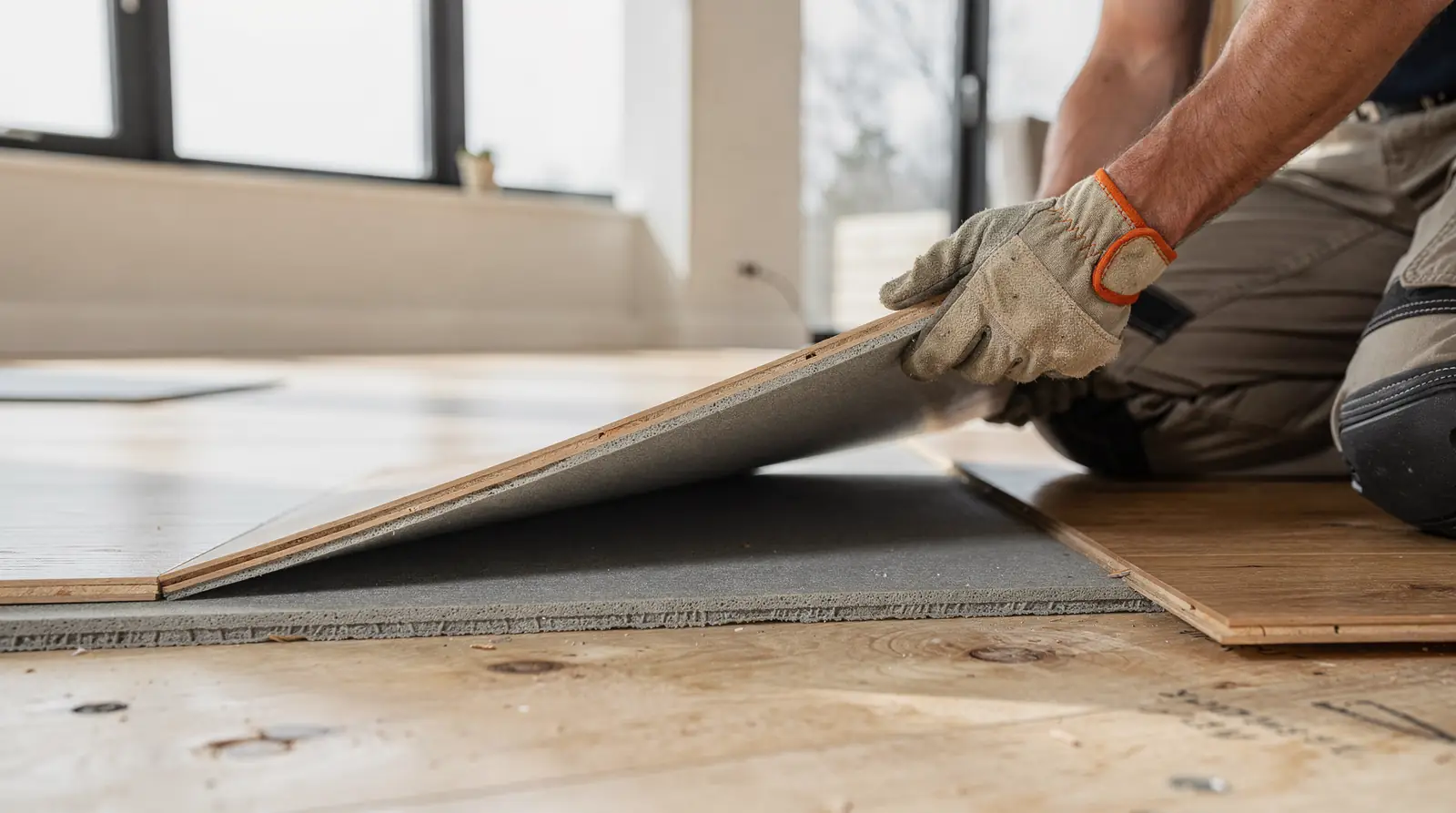
Acoustic flooring describes any floor system built or layered specifically to limit noise transfer between rooms or floors. Underlay sits beneath the surface material and absorbs vibration before it travels through joists or a subfloor. Together, these elements determine how much impact noise, footsteps, and airborne sound reach neighboring rooms or the apartment below.
Material choice plays a large role in this equation. Engineered wood flooring, for example, ranks among the most popular real-wood options partly because its layered build offers stronger stability than solid hardwood. That same multi-layer construction, built to handle hallways and living rooms, also influences how sound behaves across a room.
How does board construction affect sound reduction?
Thicker engineered boards often improve insulation as a side effect of their density. This added mass helps a room feel warmer and noticeably quieter, which matters in apartments or converted properties where noise travels easily between floors.
A few construction factors consistently affect how a floor performs acoustically:
- Board thickness: denser, thicker boards resist vibration better than thin ones.
- Layer count: multi-ply construction adds rigidity and dampens movement.
- Subfloor contact: how tightly a board sits against the base affects sound transfer.
Does thicker flooring always mean quieter rooms?
Not automatically, but thickness generally helps. Industry sources indicate that heavier, multi-layered boards create a more insulated, cosy feel compared with thinner alternatives. Pairing a thicker board with a suitable underlay typically produces the most noticeable difference in day-to-day noise levels.
Which Flooring Types Offer Better Sound Reduction?
Engineered wood and vinyl floors generally offer stronger noise control than standard laminate, largely because of how their layers are built. Acoustic flooring choices matter more than most buyers realize until footsteps start echoing through a stairwell or a neighbor below starts complaining. Get the construction wrong, and daily noise from walking, pets, or dropped objects becomes a permanent background hum that's expensive to fix later.
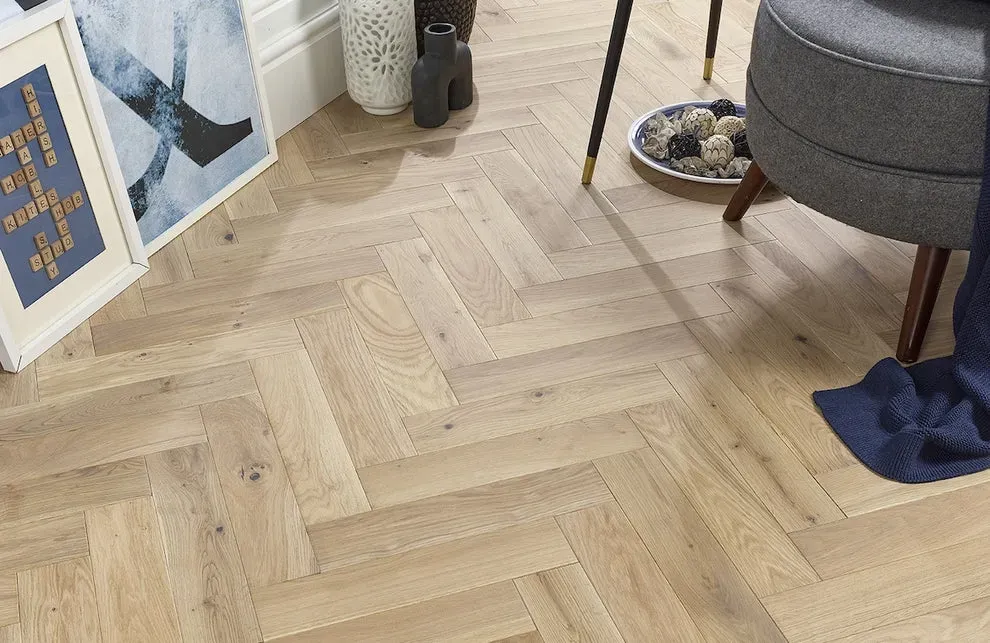
Herringbone flooring built on an engineered core, finished with a real oak veneer, holds up well under this kind of scrutiny. The layered construction gives it notable stability and durability. The solid wood surface resists the warping that can loosen joints and amplify noise over time.
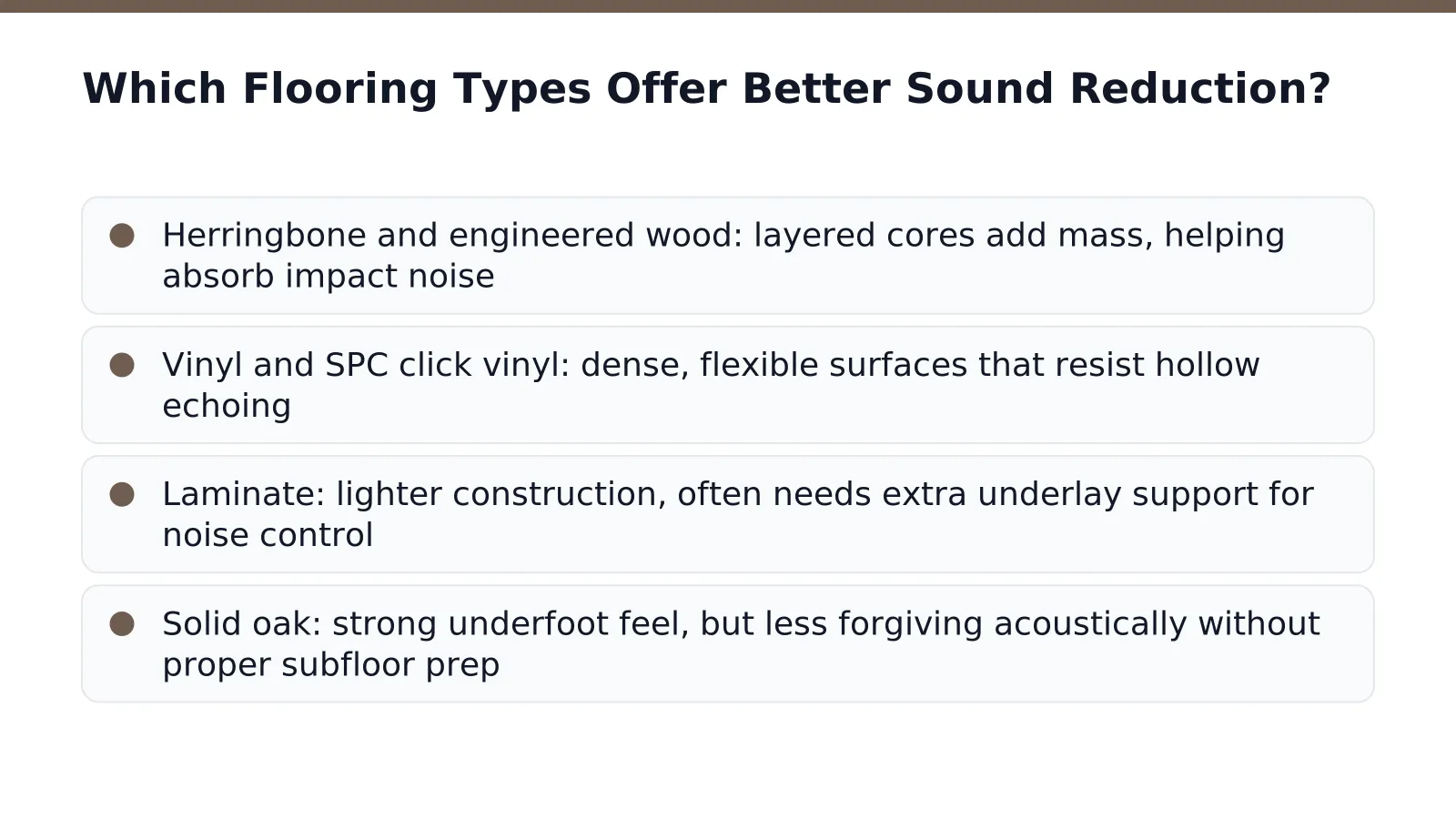
Because rooms differ in traffic, moisture exposure, and noise sensitivity, no single floor type suits every space. A range spanning herringbone, engineered wood, vinyl, laminate, solid oak, and SPC click vinyl gives homeowners different paths to better sound reduction depending on the room:
- Herringbone and engineered wood: layered cores add mass, helping absorb impact noise
- Vinyl and SPC click vinyl: dense, flexible surfaces that resist hollow echoing
- Laminate: lighter construction, often needs extra underlay support for noise control
- Solid oak: strong underfoot feel, but less forgiving acoustically without proper subfloor prep
Does underlay make a difference for sound reduction?
Yes. Underlay sits between the subfloor and the finished floor, cushioning impact and reducing the vibration that travels through joists. Its effectiveness depends on material density and thickness, so matching it to the floor type above it matters more than picking the thickest option available.
Which floor type works best for someone moving into a new property?
Many people moving house ask specifically how to cut down on noise between floors before they've even unpacked. For multi-story homes or flats, engineered wood or vinyl over a dense underlay typically performs more reliably than laminate alone.
Can Vinyl Flooring Really Reduce Noise?
Vinyl flooring reduces noise within homes, a quality widely recognized across the flooring trade for its contribution to quieter living spaces. Dense, multi-layered construction absorbs footfall and impact sound rather than letting it bounce off a hard surface. Rooms without any cushioning layer lose much of this benefit. Noise simply travels straight through the floor into the space below.
Comfort plays a role too. Vinyl flooring balances comfort, style, and practicality in busy households, making it attractive beyond its acoustic properties alone. That balance matters for families juggling pets, children, and shared living spaces where everyday noise builds up fast.
Maintenance affects performance over time. Routine upkeep, the same as any other hard flooring surface, keeps vinyl floors performing well and protects the structure responsible for sound reduction. Neglecting care wears down the surface. Can quietly undermine the very qualities that made the floor feel quiet in the first place.
Does Vinyl Flooring Work Without Underlay?
Vinyl flooring performs best when paired with a dedicated underlay layer. Underlay adds a cushioning barrier between the vinyl surface. Subfloor, improving acoustic flooring performance by absorbing vibration before it travels further. Skipping underlay leaves floors more prone to transmitting impact noise downward, a real concern for apartment owners and converted flats.
Is Vinyl Flooring Good For Noisy Households?
Families and renters in noisy households benefit from vinyl's layered build, which softens everyday clatter from footsteps, dropped items, and pet claws. Choosing a thicker vinyl product paired with proper underlay strengthens that effect further. Anyone shopping for noise control should treat underlay as part of the acoustic plan, not an optional extra.
What's The Best Next Step For Quieter Floors?
Quieter floors start with addressing rising background noise before it becomes disruptive, rather than waiting until creaks, echoes, and footfall sounds pile up into a constant irritation. Most households tune out low-level noise without noticing it. The trouble begins once that noise climbs, turning a hard floor into a source of daily frustration rather than background hum.
Tackling the issue early means looking at construction, not just surface finish. Acoustic flooring works by combining denser materials with structural layers designed to absorb impact rather than transmit it. A thicker engineered wood build, for instance, adds both warmth and a noticeable drop in sound traveling underfoot, making rooms feel calmer without any change to the visible finish.
Does The Type Of Flooring Actually Matter For Noise?
Yes, construction and material choice directly affect how much sound a floor carries. Various flooring styles including herringbone, engineered wood, vinyl (LVT), laminate, solid oak, and SPC click vinyl each have different densities and layering that influence sound reduction performance. Matching the style to the room, rather than picking on looks alone, makes the biggest practical difference.
Is Underlay Worth Adding Underneath?
Underlay plays a supporting role by cushioning impact noise between the floor surface and the subfloor below. It won't replace a well-constructed floor. It reduces vibration transfer, particularly in flats and multi-storey homes where footfall noise travels between floors.
| Priority | Action |
|---|---|
| Material | Choose denser, thicker constructions |
| Layer | Add suitable underlay beneath the floor |
| Timing | Address noise before it escalates |
Treat flooring and underlay as a combined system, not separate decisions, for the quietest result.
FAQ
What makes engineered wood flooring quieter than solid hardwood?
Engineered wood uses multi-layered core construction that reduces impact noise compared to solid hardwood, dampening vibration before it reaches the subfloor and surrounding rooms.
How does acoustic underlay help reduce noise?
Acoustic underlay sits between the subfloor. Surface layer, absorbing vibration before it travels and adding a buffer against both impact and airborne noise.
Does board thickness affect how quiet a floor feels?
Thicker engineered wood boards improve insulation, keeping rooms warmer and quieter underfoot by dampening vibration that thinner boards often amplify into knock and echo.
Conclusion
In closing, the science of sound reduction in flooring has evolved from basic material selection to sophisticated engineering that addresses multiple noise sources simultaneously. Understanding how underlayment density, surface composition, and installation methods work together allows property owners to make informed choices tailored to their specific acoustic needs. The quieter floor you seek depends less on marketing claims. More on matching the right technical specifications to your space's demands.


