How Flooring Is Being Designed for Repair Instead of Replacement
Engineered wood and solid oak flooring can often avoid full replacement because surface layers can be sanded, patched, or refinished rather than torn out. Repair-friendly styles can save money long-term.
Key Takeaways
- Repairing damaged flooring costs a fraction of full replacement, preserving your investment for years.
- Strategic repairs restore flooring appearance to like-new condition without the expense of complete installation.
- Consulting a flooring professional helps identify affordable repair solutions before damage spreads.
Why choose repairable flooring over replacement?
Repair preserves value that replacement destroys outright. A floor with isolated scratches, loose boards, or a worn finish often needs only a targeted fix, not a full tear-out. Pulling up an entire surface that could have been patched or refinished wastes money on a problem that never required a complete overhaul.
Many floors assumed to be beyond saving can instead be restored to look as good as new. Floor restoration brings back shine, color, and structural soundness without the cost or disruption of ripping up an entire room. Homeowners, property managers, and facility directors gain more by assessing damage honestly before committing to a full replacement.
Not every material responds to repair the same way, but several categories are built with repairable flooring in mind:
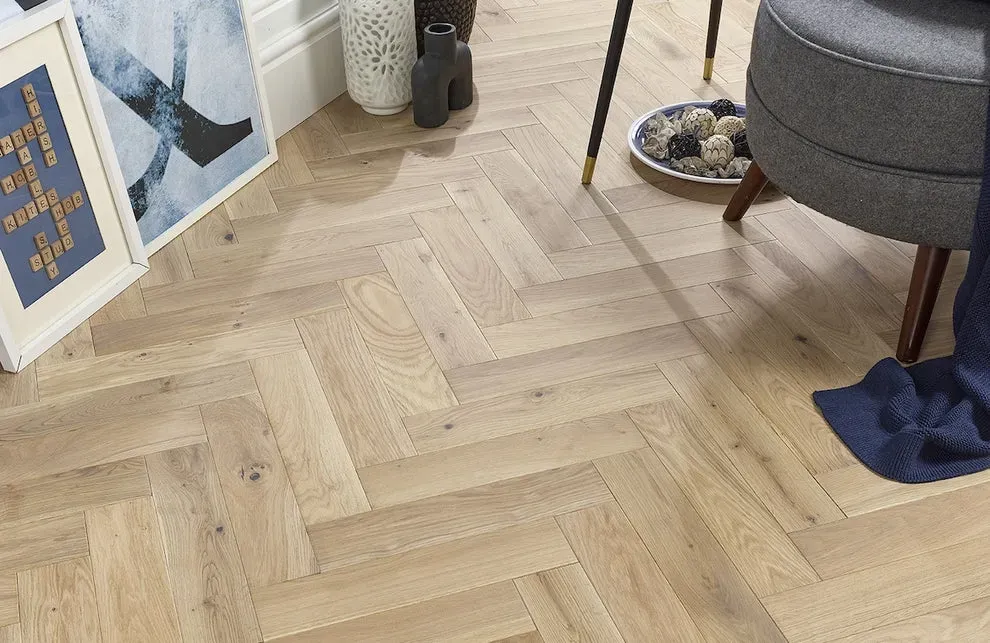
- Herringbone and parquet styles, which allow individual damaged planks to be lifted and swapped
- Engineered wood, where the top veneer can be sanded and refinished
- Vinyl (LVT) and SPC click vinyl, designed for section-by-section plank replacement
- Laminate, which permits localized panel swaps in click-lock systems
- Solid oak, known for taking repeated refinishing across its service life
These flooring styles include Herringbone, Engineered Wood, Vinyl (LVT), Laminate, Solid Oak, and SPC Click Vinyl, each designed with repair potential.
Does repairable flooring actually last longer?
Durability depends more on construction quality than on choosing repair over replacement. Engineered wood herringbone planks, for instance, are crafted to show real wood texture and color, giving restored floors lasting character long after a repair. A well-maintained, repairable floor often outperforms a hastily replaced one, since repair work targets only the damaged layer instead of disturbing the entire installation.
Which flooring types are easiest to repair?
Hardwood ranks as the strongest candidate for restoration rather than full replacement. Scratches and surface wear build up over years of daily use. These marks represent normal aging, not structural failure, which makes hardwood a genuinely repairable flooring option.
Older homes sometimes hide hardwood under layers of carpet installed decades earlier. Pulling back that carpet often reveals boards that only need sanding and refinishing, a process that falls squarely under floor restoration rather than demolition.
Engineered wood follows close behind hardwood on the repair-friendly list. Its layered construction gives engineered wood superior stability. durability compared to solid hardwood, letting it hold up against moisture and temperature swings that would otherwise warp a single-piece plank.
Can engineered wood flooring be restored instead of replaced?
Yes, in most cases. The multi-layer core gives engineered boards enough strength to handle targeted sanding. Spot repair, even in high-traffic hallways and living rooms. Thicker boards also add a measure of insulation, which keeps the repaired area performing like the rest of the floor rather than becoming a weak point.
Herringbone-pattern engineered wood deserves a specific mention. Floors built this way, including many herringbone and parquet collections, rely on an engineered core topped with a real oak veneer. That structure allows a single damaged plank to be lifted and swapped without disturbing the surrounding parquet layout.
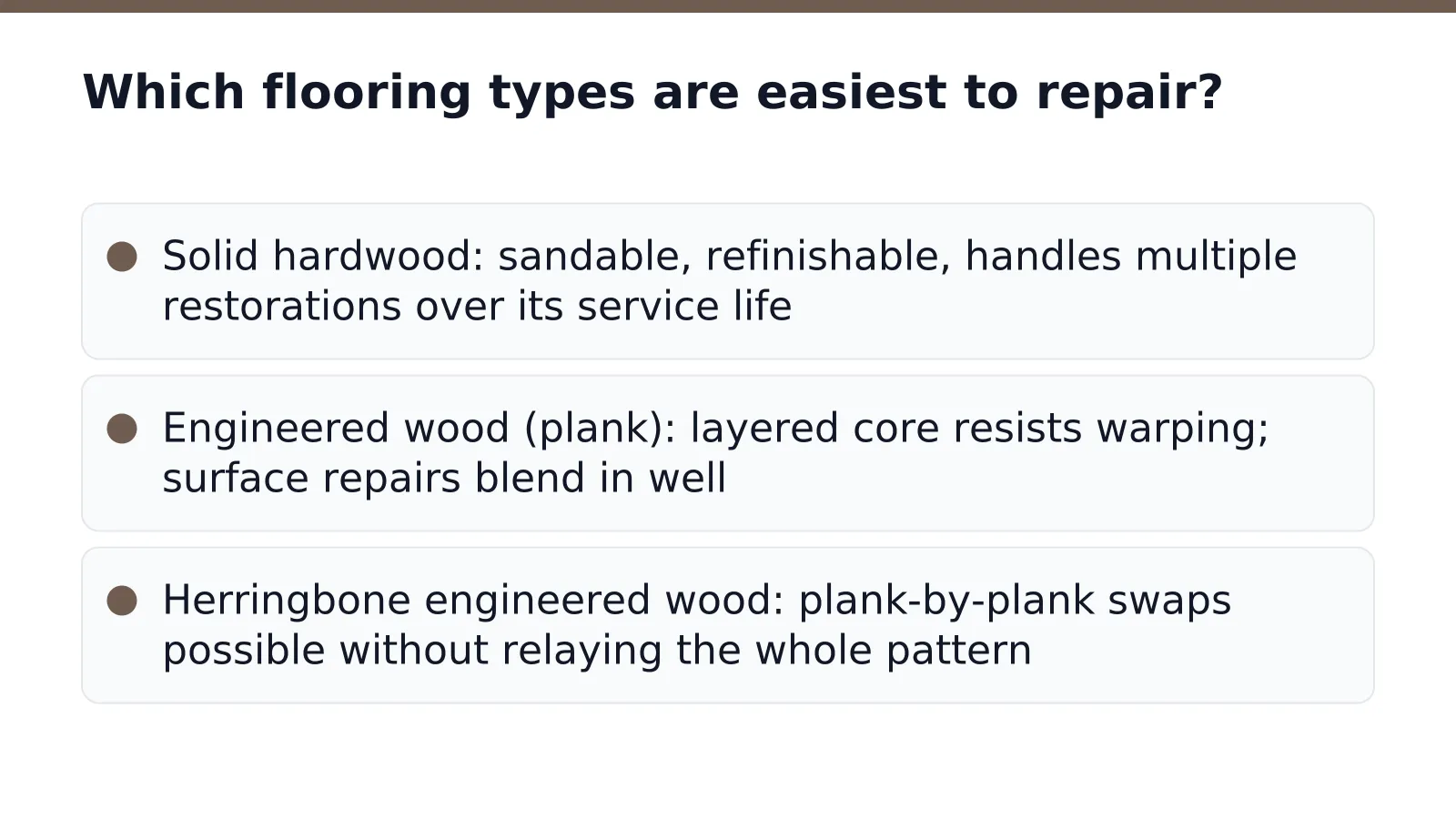
Easiest-to-repair flooring, ranked:
- Solid hardwood: sandable, refinishable, handles multiple restorations over its service life
- Engineered wood (plank): layered core resists warping; surface repairs blend in well
- Herringbone engineered wood: plank-by-plank swaps possible without relaying the whole pattern
Flooring types that rely on sealed or glued single-piece construction generally resist this kind of targeted fix far less successfully.
How does floor restoration actually work?
Floor restoration works by targeting the damaged layer of a floor rather than tearing out the whole installation. Professionals sand, strip, or refinish the worn surface, then rebuild protective coatings until the floor functions and looks sound again. This approach sits at the center of repairable flooring: materials engineered or structured. A damaged top layer can be renewed without removing the entire assembly underneath.
Hardwood offers the clearest example of this process in action. Restoring a scratched or dulled hardwood floor takes real labor, including sanding down old finish, repairing boards, and reapplying protective coats. Even with that effort, the total cost stays lower than ripping out the floor and installing a new one. Most restoration projects also call for a trained installer rather than a DIY attempt. Uneven sanding or poor finish application can shorten a floor's lifespan instead of extending it.
Is restoring a floor cheaper than replacing it?
Restoration generally costs less than full replacement because labor and material needs stay smaller in scope. A repair job addresses only the affected boards, planks, or tiles. Replacement requires removing the entire system and starting over.
Can all flooring types be restored?
Not every floor qualifies, but many common types do. Flooring repair is defined industry-wide as a targeted fix that returns a damaged floor to safe, functional condition without pulling up the full installed system.
Durability also depends on maintenance after restoration. Consistent cleaning and prompt attention to minor wear keep a restored floor performing well for years, cutting down the chances of needing another major repair or a full replacement down the line. Proper ongoing care helps flooring stay attractive and functional far longer than neglect allows.
When does repair make more sense than replacement?
Repair wins out whenever damage stays confined to the surface or a single section of flooring. Minor scratches, worn finish, or an isolated board rarely point to structural failure underneath. As one Nashville flooring resource notes, not every imperfection demands a full tear-out. Small-scale issues get handled quickly and affordably through targeted repair work, preserving repairable flooring rather than scrapping it outright.
The choice carries more than cosmetic weight. Flooring decision frameworks treat repair versus replacement as a question with structural, financial, and regulatory consequences, not just an aesthetic one. That matters most for commercial facility directors. Permitting rules and liability concerns can turn a simple patch job into a compliance issue if handled incorrectly.
Signs that favor repair over replacement include:
- Damage limited to one room or a small section of boards
- Subfloor underneath remains dry and structurally sound
- Finish has dulled or scratched but the material itself is intact
- Issue is cosmetic rather than caused by water or pest damage
Is engineered wood flooring repairable?
Engineered wood often tolerates floor restoration better than many assume, which is part of why it suits both homes and commercial interiors. Its layered construction and durability make it a strong match for high-footfall spaces like shops, cafes, restaurants, and bars. Surface wear happens fast but structural damage stays rare. That resilience gives facility directors a practical reason to repair rather than rip out entire floors after routine traffic damage.
Property managers and builders also benefit from having options at different budgets, giving buyers flexibility when selecting materials suited to repair-friendly use over the long term, rather than committing to full replacement every time wear appears.
How do you maintain repairable flooring long-term?
Routine maintenance keeps repairable flooring performing well for years, much like any other surface in a home or commercial space. Skipping regular care shortens the window for simple fixes and pushes owners toward costlier floor restoration work down the line. Proper cleaning methods matter more than product price tags.
Correct cleaning habits protect the finish without wearing it down. Harsh scrubbing or the wrong tools strip away the protective layer, leaving floors dull and more prone to damage over time.
What's the biggest threat to a floor's surface?
Dust and grit cause most of the fine scratching that erodes durability over the years. A soft broom or a vacuum with no rotating brush head removes debris safely. Standard rotating brush attachments grind particles into the surface instead of lifting them away.
How should spills be handled to avoid repair later?
Liquid left to sit causes the kind of moisture damage that often forces a repair call. Blotting spills immediately with a soft, clean cloth stops liquid from reaching the subfloor or seams. Warm, soapy water on a fresh cloth handles the residue afterward.
Property managers and facility directors overseeing multiple units benefit from building these habits into standard cleaning schedules:
- Sweep or vacuum high-traffic areas daily
- Blot spills the moment they happen
- Avoid rotating brush vacuum heads on hard floors
- Use warm, soapy water for residue, not harsh chemicals
FAQ
Why choose repairable flooring over replacement?
Repair preserves value by fixing isolated scratches, loose boards, or worn finishes without a full tear-out. This targeted approach restores appearance to like-new condition while avoiding the expense and disruption of complete reinstallation.
Which flooring types are easiest to repair?
Hardwood ranks as the strongest candidate for restoration, since surface scratches and wear represent normal aging rather than structural failure. Engineered wood follows closely, with its layered construction offering stability against moisture and temperature swings.
Is engineered wood flooring repairable instead of replaceable?
Engineered wood can often be sanded, patched, or refinished rather than requiring full replacement. Engineered wood and solid oak styles are often chosen specifically for this repair-friendly construction.
Conclusion
In closing, flooring designed for repair rather than replacement represents a fundamental shift in how spaces are maintained and valued over time. By selecting materials that withstand targeted fixes, whether through refinishing, patching, or component replacement, property owners reduce waste, preserve investment, and extend the lifespan of their floors significantly. This approach demands upfront consideration of material durability and repairability, but the long-term benefits justify the planning required.


About The Author