


MVER vs RH: The Moisture Test Most Homeowners Misunderstand When Getting a New Floor

Fitting new flooring? A basic understanding of moisture testing can prevent costly problems later on. The two main approaches — Moisture Vapor Emission Rate (MVER) and Relative Humidity (RH) testing — measure different aspects of a concrete slab. This guide explains how each test works, when to use them, and which tools give reliable results so your floor behaves as expected.
What Is the Difference Between MVER and RH Moisture Tests?
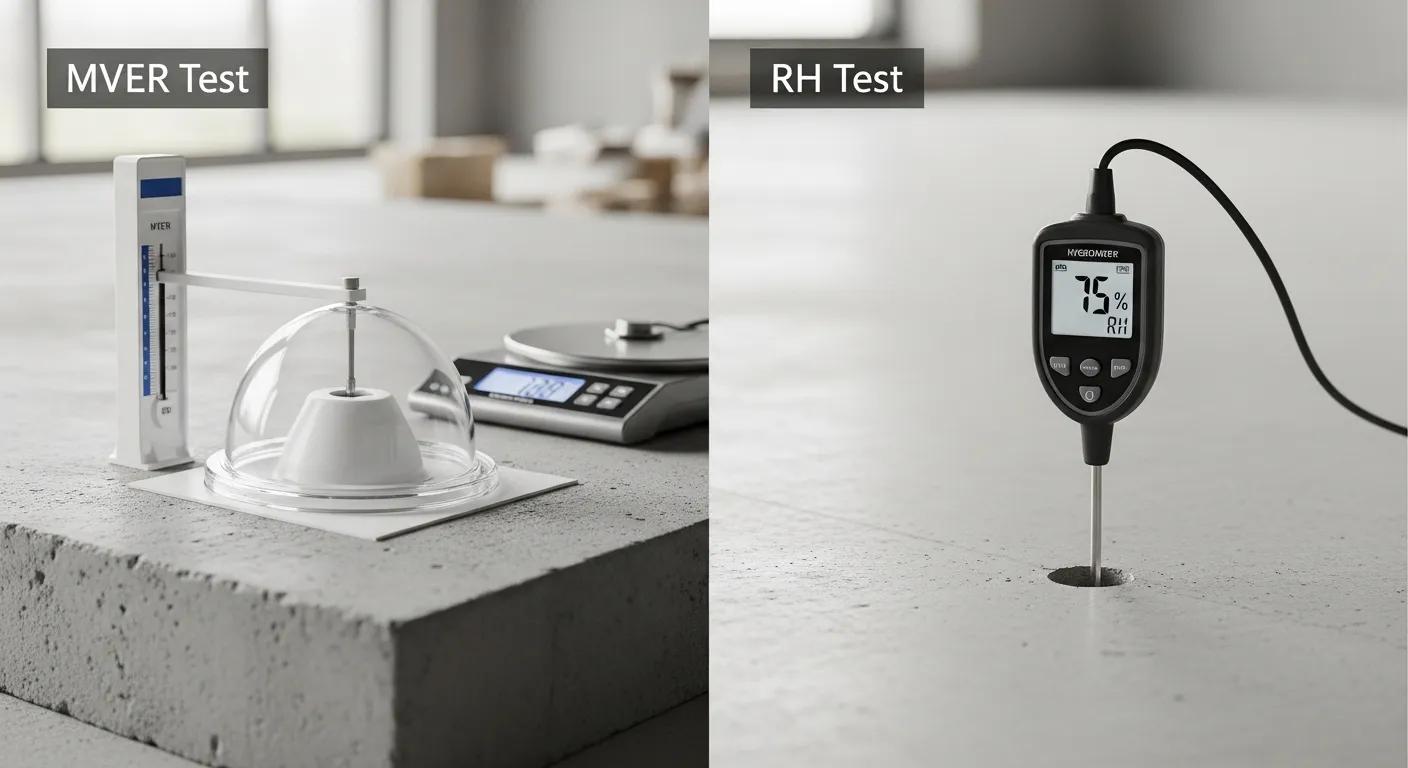
Both tests assess concrete moisture but look at different things: MVER measures moisture vapour leaving the surface, while RH testing reads the slab’s internal humidity. Picking the right measurement helps you avoid problems after installation.
How Does MVER Measure Moisture Vapor Emission Rate?
MVER is a surface test that reports how much moisture vapour a slab emits over time (commonly shown per 1,000 sq ft per 24 hours or g/m² per 24 hours). A sealed dome or sheet traps vapour and the collected moisture is measured. High emission rates increase the risk of adhesive failure, mould and delamination.
A common MVER technique is the anhydrous calcium chloride method, though its results can be influenced by ambient conditions.
Measuring Concrete Moisture Vapor Emission Rate (MVER)
One commonly used method in the U.S. to quantify a concrete slab’s moisture vapour emission rate (MVER) is the anhydrous calcium chloride test. High ambient relative humidity makes achieving a 3-lb MVER difficult, even when the slab itself is dry.
Moisture testing of concrete slabs, 2006
How Does RH Testing Assess Relative Humidity Inside Concrete?
RH testing uses sensors installed in drilled holes (typically 40%–80% of the slab depth) to measure internal humidity. Because it reads conditions inside the slab rather than surface emissions, RH testing is a better indicator of long‑term moisture behaviour and the risks to adhesives and wood flooring.
Standardised methods like ASTM F2170 make RH testing a reliable choice for most flooring projects.
ASTM F2170: Relative Humidity Testing for Safer Flooring Installations
Proper moisture testing is essential before proceeding with flooring. In 2003, ASTM F2170 was introduced in the U.S. for relative humidity testing in concrete. That standard provides a consistent method for interpreting moisture (and pH) test results.
Moisture testing of concrete slabs, 2003
Why Is Moisture Testing Critical for Flooring Installation?
Moisture undermines flooring performance: skipped or incorrect testing can lead to cupping, buckling, adhesive failure and mould. The right moisture check helps you choose compatible materials and any mitigation needed so the floor lasts.
Even when concrete looks dry on the surface, accurate RH testing is often necessary to uncover hidden moisture problems.
Accurate RH Testing for Concrete Slab Moisture
Never assume new concrete is dry enough for flooring just because it appears cured. To determine slab moisture accurately, use an RH testing system that is straightforward, fast, and reliable.
Best Practices for Testing Relative Humidity, 2022
How Can Moisture Levels Affect Different Flooring Products?
Different materials tolerate moisture differently. Solid hardwood is sensitive and can move or cup with moisture changes. Vinyl and tile cope better with moisture but can still suffer adhesive or finish failures if levels are too high. Always check your product’s moisture limits before fitting.
Can Proper Moisture Testing Prevent Flooring Damage?
Yes — accurate moisture testing finds issues before installation so you can delay work, add barriers or treatments, or pick a more suitable floor covering. That reduces repair bills and helps the floor last longer.
What Are the Pros and Cons of MVER, RH, and Calcium Chloride Tests?
Each method has strengths and limits. Choose based on flooring type, site conditions and how conclusive you need the result to be.
| Test Method | Pros | Cons |
|---|---|---|
| MVER | Directly measures surface vapour emissions | May not reflect in‑slab moisture |
| RH | Gives an accurate picture of internal moisture levels | Requires drilling into the slab and more setup time |
| Calcium Chloride | Simple, low‑cost surface emission check | Affected by ambient conditions; only measures surface vapour |
Use this comparison to match tests to your flooring and site — sometimes combining methods gives the clearest picture.
How Accurate Is the Calcium Chloride Test Compared to MVER and RH?
The calcium chloride test is a quick, inexpensive way to estimate surface emission but is less precise than in‑slab RH testing and less comprehensive than some other MVER approaches. Consider site conditions before relying on it alone.
Which Test Is Best for Hardwood and Other Flooring Types?
For solid hardwood, RH testing is generally preferred because internal slab moisture drives wood movement. For resilient floors (vinyl, tile), MVER or surface emission checks can be acceptable — always confirm the manufacturer’s moisture limits and add extra testing if anything is unclear.
How to Choose the Right Moisture Test and Equipment for Your Floor?
Base your approach on the flooring material, how the slab was cured and the local environment. When in doubt, follow manufacturer guidance and hire a qualified tester to avoid callbacks.
What Moisture Testing Equipment and Hygrometers Are Recommended?

Reliable readings start with the right tools. Common options include:
- Digital Hygrometers : Accurate, easy‑to‑read humidity measurements for quick checks.
- Moisture Meters : Useful for measuring wood moisture and checking surface concrete.
- Infrared Thermometers : Help spot temperature differences that can indicate damp areas.
Using multiple tools and following recognised procedures gives the most confidence in your results.
How to Interpret Test Results to Select Compatible Flooring Products?
Readings above a product’s limits mean you should delay installation, apply mitigation measures, or choose a different covering. If you’re unsure, follow the manufacturer’s limits and get a professional opinion to match results with the correct installation method.
By understanding MVER and RH testing , you can protect your flooring investment and avoid common moisture‑related failures.
Frequently Asked Questions
What are the signs that my concrete slab has moisture issues?
Look for water stains, white efflorescence or a musty smell. Signs in installed floors — warping, buckling, bubbling or adhesive failure — also point to excess moisture. Run formal tests before repairing or replacing flooring.
How often should I conduct moisture testing on my concrete slab?
Test before any installation and after major events (flooding, plumbing leaks or big humidity shifts). For new builds, follow the manufacturer’s timing for post‑curing tests.
Can I perform moisture testing myself, or should I hire a professional?
Homeowners can carry out basic checks with consumer meters or hygrometers, but professionals provide accurate RH/MVER testing and correct interpretation. For hardwood or high‑value jobs, it’s worth hiring a qualified tester.
What should I do if my moisture test results are too high?
Options include waiting for drying, installing moisture barriers or mitigation systems, or selecting moisture‑tolerant flooring. A flooring professional can recommend the most practical solution for your situation.
Are there specific flooring types that are more resistant to moisture?
Yes. Vinyl and tile tolerate moisture better than solid hardwood. Engineered wood is usually more stable than solid hardwood in damp conditions. Choose materials suited to the room and its moisture risk.
What is the role of moisture barriers in flooring installation?
Moisture barriers block moisture from the slab and protect adhesives and flooring layers. In moisture‑prone areas they help prevent mould, adhesive failure and premature floor damage.
MVER vs RH
Knowing the difference between MVER and RH — and choosing the right test for your floor type — helps you avoid costly problems. Test early, follow manufacturer limits and get professional help when results are borderline to keep your new flooring performing as expected.


