Adhesive vs Click: The Long-Term Stability Debate
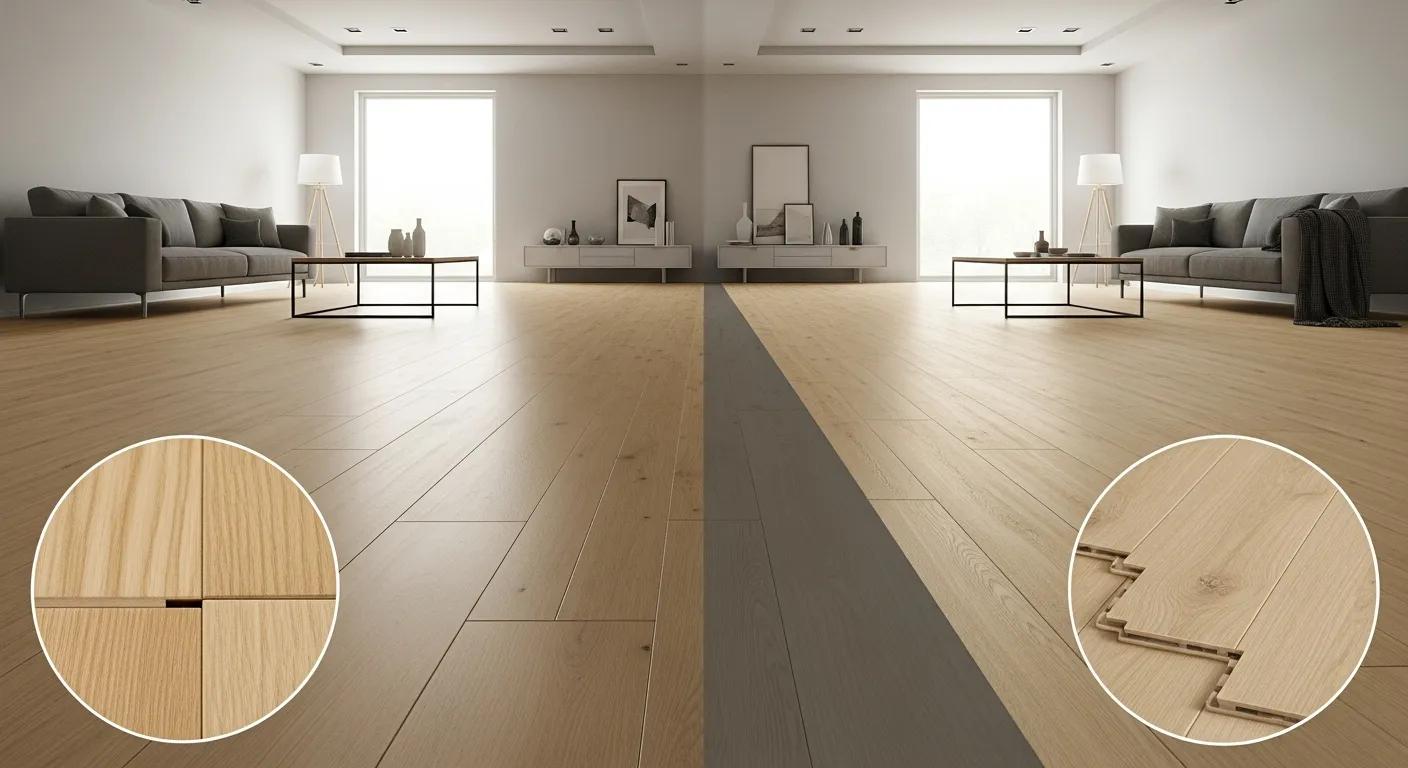
Picking between adhesive (glue‑down) and click (click‑lock) flooring changes how the floor performs over years and how much work fitting it will be. This short guide walks through how each system is installed, where each shines, and the key trade‑offs — from durability and moisture resistance to the accessories that make installation easier — so you can choose the right approach for each room.
What Are Adhesive and Click Flooring Systems?
Glue‑down flooring is fixed directly to the subfloor with an adhesive to create a permanent, stable surface. Click (floating) systems use interlocking edges so planks join together and sit above the substrate, making installation quicker and removal easier when you need to replace or repair.
How Does Glue Down Installation Work for Adhesive Flooring?

Typical steps: prepare the subfloor so it’s clean and level, spread the manufacturer‑recommended adhesive, wait until it’s tacky as directed, then lay and press the planks to form a secure bond. That permanent attachment delivers excellent stability in busy areas.
What Is Floating Floor Installation in Click Lock Flooring?

Click‑lock floors snap along their edges and float over the subfloor, which lets the surface expand and contract. Because they go down faster and need less specialist tooling, many DIYers and fitters choose them for speed and flexibility.
What Are the Pros and Cons of Adhesive and Click Flooring?
Both systems have clear advantages. Your decision should be based on the room’s use, expected wear, moisture exposure and whether you want a permanent floor or something easier to replace later.
What Are the Advantages and Disadvantages of Glue Down Vinyl Flooring?
Glue‑down vinyl advantages:
- Stability: Bonding to the subfloor limits movement and keeps the surface steady.
- Durability: Typically better resistance to wear and moisture when installed correctly.
- Design options: Suits a wide range of plank sizes and finishes for a more permanent look.
Trade‑offs:
- More involved installation: Needs careful prep, time and professional skill in many cases.
- Less reversible: Removing glued planks can be difficult and may damage the substrate.
- Curing time: Adhesives need time to set before the floor can take heavy use.
What Are the Benefits and Limitations of Click Lock Flooring?
Click‑lock benefits:
- Quick installation: Fast to fit and often a DIY‑friendly option.
- Flexible placement: Can be installed over many flat, dry surfaces without full removal of the old floor.
- Removability: Easier to lift and replace individual planks if needed.
Limitations:
- Potential movement: Floating floors can gap or shift if not fitted properly.
- Moisture considerations: Some click products are less tolerant of prolonged wet conditions, though modern waterproof cores have closed that gap for many vinyl ranges.
- Thickness/feel: There are fewer heavy‑duty thickness options in some floating ranges, which can affect underfoot feel.
How Do Adhesive and Click Flooring Compare in Long-Term Stability?
Long‑term performance comes down to the product itself, the quality of the fit and sensible maintenance. Matched to the environment and installed correctly, either system can deliver many years of reliable use.
Which Flooring Type Offers Better Durability and Moisture Resistance?
Glue‑down installations generally offer superior stability because the adhesive creates a lasting bond with the subfloor, helping the floor resist heavy traffic and often giving better moisture protection — which is why glue‑down is common in commercial kitchens and healthcare settings.
Research indicates some adhesives keep strength through wet conditions and freeze‑thaw cycles, reinforcing their reputation for resilience.
Adhesive Strength & Durability in Flooring Systems
A study measured shear and tensile strength for deformable cement adhesives reinforced with fiberglass mesh in a lightweight floor system without screeds. Tests ran in dry and wet conditions and through freeze–thaw cycles. Results showed water absorption did not significantly reduce adhesion to terracotta and, in some configurations, adhesion even improved.
The effects of various parameters on the strengths of adhesives layer in a lightweight floor system, T Chyzy, 2020
Click systems are durable when installed to specification, but floating constructions remain more vulnerable in persistently wet settings; that said, many modern waterproof cores have narrowed the performance gap.
How Does Maintenance Affect Flooring Stability Over Time?
Maintenance has a big impact on service life. For glue‑down floors, keep the surface clean and prevent moisture from reaching the bond. For floating floors, wipe spills quickly and check for gaps to avoid edge lifting. Good care extends lifespan whichever system you choose.
Routine maintenance and its cost noticeably affect a floor’s life‑cycle cost and environmental footprint — sometimes making up a large share of total lifetime expense.
Flooring Life Cycle: Maintenance & Cost Impacts
Maintenance can represent a significant portion of a flooring product’s environmental and economic impacts. For example, maintenance costs may account for around 49% of hardwood’s total cost and roughly 30% for linoleum, vinyl and carpet. Expected service life and upkeep therefore play a major part in selecting the right floor.
Impact of maintenance on life cycle impact and cost assessment for residential flooring options, 2015
What Flooring Accessories and Adhesive Types Support Each Installation Method?
Choosing the right adhesive and accessories improves performance and longevity whether you glue‑down or float the floor.
Which Flooring Adhesive Types Are Best for Glue Down Systems?
Common adhesives:
- Pressure‑sensitive: Lets you reposition planks during layout and is common with vinyl installations.
- Water‑based: Lower‑VOC option with strong bonds suitable for many materials.
- Solvent‑based: Offers very high bond strength and moisture resistance for heavy‑duty work, though use is declining due to regulations.
Always match the adhesive to the flooring product and site conditions for best results.
What Accessories Enhance Floating Floor Installation for Click Flooring?
Helpful accessories:
- Underlayment: Adds cushioning, reduces sound and can provide a moisture barrier.
- Transition strips: Create neat joins between different floor surfaces or levels.
- Flooring spacers: Ensure consistent expansion gaps around the room perimeter.
Good underlayment in particular improves comfort and acoustic performance for floating floors.
Studies also show that floating floor constructions with quality underlayment can significantly improve impact sound insulation.
Benefits of Floating Laminate Flooring
Lightweight laminate and other floating floors are widely used in homes and commercial spaces. When properly built with suitable underlayment, floating constructions can improve impact sound insulation and overall acoustic performance.
Impact sound insulation of a lightweight laminate floor resting on a thin underlayment material above a concrete slab, JP Arenas, 2022
Frequently Asked Questions
What factors should I consider when choosing between adhesive and click flooring?
Think about installation difficulty, moisture exposure, anticipated footfall, the condition of the subfloor and how long you plan to keep the floor.
Can I install click flooring over existing flooring?
Often yes — click floors can be laid over clean, dry, level existing surfaces, saving time when the substrate is in good condition.
How do I maintain adhesive flooring to ensure its longevity?
Clean regularly with a damp mop and a pH‑neutral cleaner, wipe spills immediately, avoid harsh chemicals and watch for signs of moisture intrusion.
What are the best practices for installing click flooring?
Start with a flat, dry subfloor, use the manufacturer‑recommended underlayment, acclimatise the planks as directed and leave consistent expansion gaps so seams remain tight.
Is click flooring suitable for areas with high moisture, like bathrooms?
Some modern vinyl click products are water‑resistant or fully waterproof and can work in bathrooms when installed to the manufacturer’s instructions; for regularly wet areas, glue‑down systems with proper moisture protection are often the safer choice.
What types of underlayment are recommended for click flooring?
Foam underlayment is commonly used for comfort; use a moisture‑barrier underlayment in damp spaces and an acoustic underlayment where sound control matters.
Conclusion
Choose glue‑down where permanent stability and moisture protection matter most; choose click where speed, flexibility and easy replacement are priorities. Match the product, adhesive or underlayment and professional installation practices to the space to get the longest service life from your floor.


About The Author