The Lifecycle of a Floor: From Factory Pallet to Skip
A floor’s lifecycle covers every stage from raw-material sourcing and factory production, through installation and day-to-day use, to repair, replacement and final disposal. Knowing that lifecycle helps homeowners, installers and facilities teams make choices that cut long‑term cost, boost performance and reduce environmental impact. This UK-focused guide explains how material choice, installation technique and maintenance affect how long floors last, when to repair or replace them, and what practical disposal and recycling options exist in the UK. Read on for material-by-material lifespan estimates, moisture-control and installation best practice, clear signs a floor needs replacing, and sensible end‑of‑life options.
The built environment’s large environmental footprint makes it especially important to manage material lifecycles — flooring is frequently replaced during fit‑outs, so better choices here add up.
Circular Economy & Waste in UK Office Fit-Outs
The built environment is the most resource‑intensive sector of the economy, accounting for over half of extracted materials and around one third of total waste generated. Within that sector, the most frequent replacements of building materials and components happen during fit‑out — the process of installing interior fittings, fixtures and finishes. These items are replaced more often in non‑domestic buildings, so non‑domestic fit‑outs drive repeated material consumption and waste.
Circular economy and office fit‑out: an analysis for office fit‑out processes based on material flows, 2021
This article also links practical guidance to buying: if you’re ready to move from planning to action there are straightforward ways to find and buy a wide range of flooring products at competitive prices, while ensuring a good customer experience. The sections below follow the lifecycle in order — manufacture and sourcing, installation for longevity, day‑to‑day maintenance, replacement decision‑making and UK disposal/recycling routes — and include comparison tables, checklists and immediate steps you can use today.
From Factory to Floor: Flooring Manufacturing, Sourcing and Materials
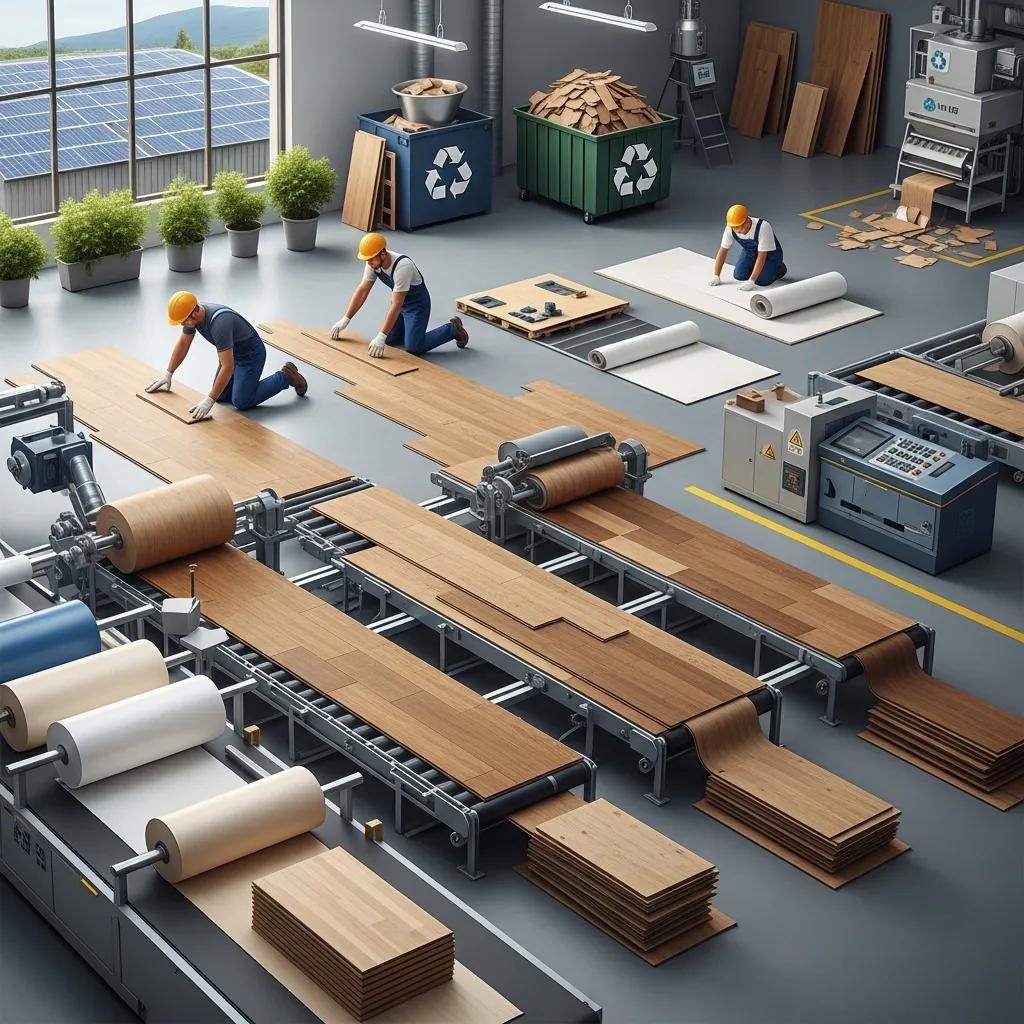
How a product is made and where its materials come from determine much of its durability and recyclability. The choice of timber species, polymer formulation, fibre type and backing construction sets wear characteristics, moisture resistance and end‑of‑life options. Manufacturers turn these inputs into engineered boards, laminate panels, luxury vinyl tile (LVT), tufted carpet and tiles through pressing, coating and lamination steps that influence longevity and the ease of repair. Knowing these processes helps buyers prioritise attributes such as wear‑layer thickness, recycled content and low‑VOC finishes when choosing flooring.
Materials differ widely in origin and environmental impact, and those differences affect both lifespan and disposal. The next section breaks down common flooring types, where their materials typically come from, and practical recycled‑content options.
What materials go into flooring and where do they come from?
Each flooring type follows a different material chain, which in turn shapes durability and sustainability. Solid timber typically uses hardwood species or plantation softwoods; reclaimed timber carries high embodied value and often lasts a long time but is limited in supply. Engineered wood pairs a timber veneer with plywood or HDF cores, offering stability and appearance while sourcing veneer from managed forests or reclaimed stocks. Laminate and LVT mainly use wood fibre, melamine resins, PVC and plasticisers derived from petrochemicals, although recycled polymers are increasingly used to cut virgin feedstock demand. Carpets are made from synthetic fibres like nylon and polypropylene or natural fibres such as wool; backing layers and adhesives complicate recycling. Understanding where materials come from helps clarify the trade‑offs between longevity and end‑of‑life options.
This material map naturally leads to how sustainable manufacturing choices alter a product’s lifecycle, and how those choices affect maintenance and recyclability.
How does sustainable manufacturing shape the lifecycle?

Sustainable manufacturing choices — higher recycled content, low‑VOC finishes, energy‑efficient production and design for disassembly — directly affect a floor’s usable life and disposal routes. For example, vinyl made with more recycled PVC reduces virgin material demand but may need specialised recovery at end‑of‑life. Low‑VOC finishes improve indoor air quality and usually indicate better surface performance, which can reduce wear and cleaning needs. Certification and traceability can signal responsibly managed forestry for timber and give buyers confidence in durability claims. Trade‑offs exist: some high‑recycled‑content products can be less stable in humid conditions, and circularity depends on local recovery infrastructure. Balancing cost, durability and recyclability lets you make informed purchases that influence the whole lifecycle.
How a product is made also affects the installation choices that determine on‑site performance and lifespan.
Installing for Longevity: Installation Practices, Methods and Prep
Good installation turns product potential into real‑world lifespan by securing stability, preventing moisture ingress and using the right components — underlay, adhesives and surface finishes. Subfloor tolerances, moisture control and the chosen installation method (click‑lock, glue‑down, nailed) are the moments that decide whether a product will meet its expected durability. A properly prepared subfloor and the correct underlay limit movement, stop moisture problems and protect finishes, while an experienced installer gets gaps, transitions and adhesives right. Spending time on preparation and matching the installation system to the use case reduces premature failures and warranty issues.
When choosing between professional installation and DIY, factor in complexity, warranty terms and long‑term performance — turnkey purchase‑and‑fit options are available at competitive prices for those who prefer that route. The subsections below compare common installation systems and outline practical moisture‑control strategies for subfloors.
Which installation methods influence long-term durability?
Installation method affects stability, moisture vulnerability and repairability. Click‑lock systems install quickly and make plank replacement easier but need a very flat subfloor and can be sensitive to moisture if seams open. Glue‑down installations, common for LVT and some engineered woods, create a stable, low‑movement surface suited to heavy traffic but rely on correct adhesive choice and subfloor porosity control. Nailed or stapled solid hardwood gives strong mechanical fixing and allows multiple sand‑and‑refinish cycles — extending life — but needs a robust subfloor and can be noisy without the right underlay. Typical failure modes — seam separation, adhesive failure, cupping — nearly always trace back to subfloor preparation and environmental control.
Those trade‑offs lead into the next essential topic: assessing and remediating the subfloor and managing moisture before installation.
How to prepare subfloors and ensure proper moisture control?
Start subfloor preparation with a full assessment: check flatness tolerances, cleanliness, level and relative humidity using moisture meters or in‑situ RH tests. Acceptable tolerances depend on the product — small deviations can be levelled with screeds or levelling compounds, while serious defects need structural repair. Moisture mitigation options include damp‑proof membranes, primers, vapour retarders and controlled drying or dehumidification for new screeds; the right choice depends on subfloor type (concrete or timber) and product sensitivity. Correct preparation protects warranties and prevents common failures such as adhesive breakdown, swelling or buckling when moisture fluctuates. If you’re unsure, get a qualified flooring contractor to test and advise on remediation.
A carefully executed installation reduces future maintenance and helps the floor reach its expected in‑service life, which brings us to everyday care and maintenance.
The Use Phase: Maximising Floor Lifespan Through Care and Maintenance
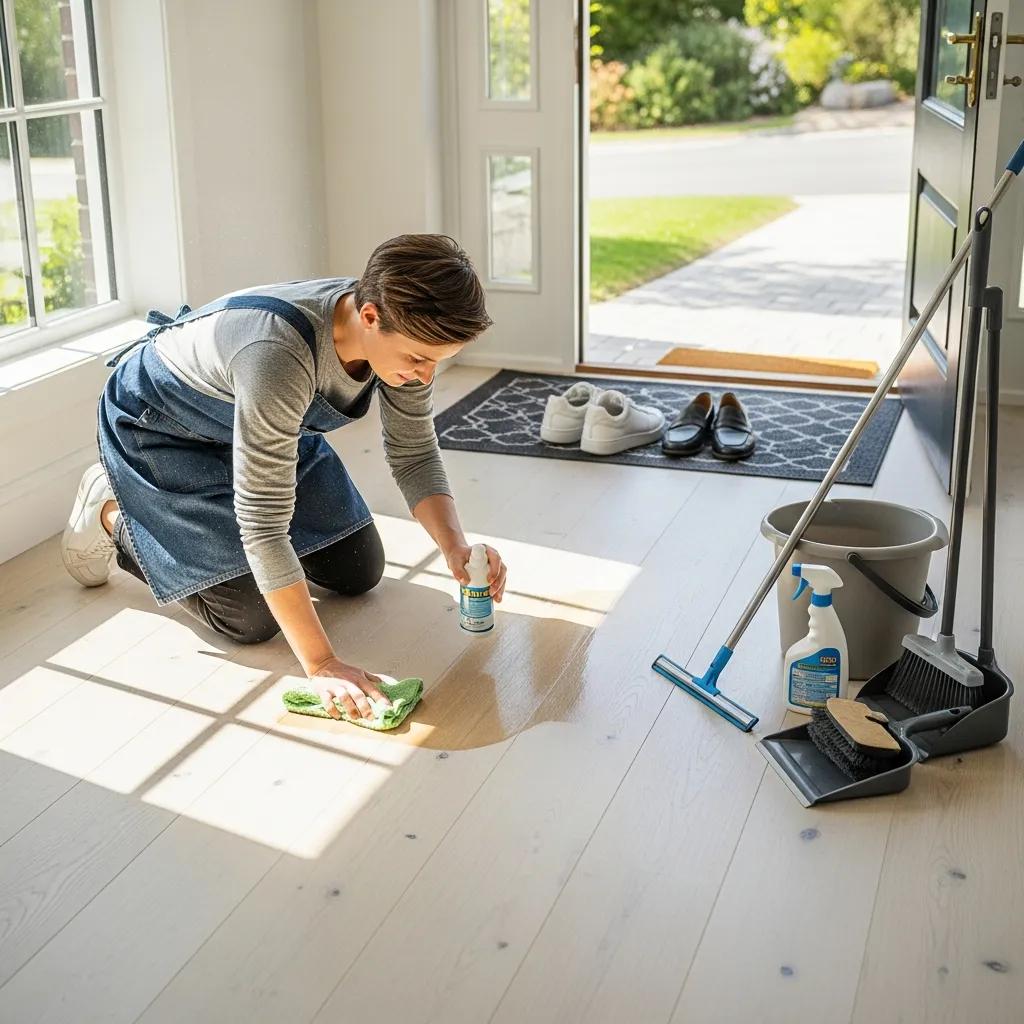
How a floor is used determines how close it gets to its theoretical lifespan. Regular cleaning, protection against concentrated wear and timely repairs preserve value and delay replacement. Lifespan varies by type and by traffic, refinishing potential and moisture exposure; straightforward maintenance schedules — daily, weekly and periodic — are the best way to achieve design life. Preventative steps such as entrance mats, felt pads, protective underlays and controlling indoor humidity reduce abrasive wear and dimensional stress. Prompt small repairs, and occasional professional deep cleaning or refinishing when needed, extend usable life and keep the floor looking right.
Below is a compact comparison table summarising expected lifespans and maintenance notes for major flooring types to help quick decision‑making.
Different flooring types show distinct expected lifespans and maintenance needs:
| Flooring Type | Expected Lifespan | Key Maintenance/Repair Notes |
|---|---|---|
| Hardwood | 50–100+ years (refinishable) | Regular dry cleaning, occasional sanding and refinishing; control humidity |
| Engineered wood | 20–30 years (wear‑layer dependent) | Dry/damp cleaning, protect from standing water; limited refinishing |
| Laminate | 10–25 years | Dry cleaning, replace damaged boards; avoid excessive moisture |
| Luxury Vinyl Tile (LVT) / Vinyl | 15–25 years | Regular cleaning, avoid abrasive cleaners; can be patched or replaced in sections |
| Carpet | 5–15 years | Frequent vacuuming, deep cleaning, rotate rugs; replace when padding or fibre degrades |
This table shows how maintenance effort links directly to lifespan and repairability, and helps set practical daily care routines.
Focus on a few high‑impact routines you can start immediately to prolong life.
- Daily protection: Fit entrance mats and use felt pads under furniture to stop grit-driven abrasion.
- Weekly maintenance: Dry‑mop or vacuum to remove particles; damp‑mop where the material allows, using manufacturer‑recommended cleaners.
- Periodic care: Book deep cleaning, recoating or refinishing as the material and wear level require.
These routines reduce wear and extend service life. The next paragraph covers product choices that support longevity and aftercare.
To support long life and practical maintenance, consider protective underlays, manufacturer‑approved cleaning products and warranties that match expected use and traffic. These accessories are often competitively priced and can be sourced alongside flooring to improve overall satisfaction. Choosing the right underlay and approved cleaners preserves finishes and helps you realise the lifespan estimates in the table above.
When to Replace: Signs, Costs and Replacement Decisions
Knowing when to replace comes down to clear indicators of functional or safety failure, and a pragmatic comparison of repair costs versus the value of a new floor. Watch for structural distortion (buckling, big gaps), surface wear beyond the wear layer, persistent odour or contamination, and failed moisture‑sensitive joints. Costs vary by material and scope: small repairs can be cheap, while uplift, substrate remediation and new materials push replacement costs up. Use a decision framework that balances aesthetics, ongoing maintenance, safety and remaining useful life to see whether repair or replacement is the smarter choice.
Below is a practical cost and decision table to weigh repair versus replacement across common flooring types.
Typical repair and replacement cost considerations by flooring type:
| Flooring Type | Typical Cost Range (UK) / Decision Factor |
|---|---|
| Hardwood | Repair: moderate (local sanding/patch); Replace: high (supply + install) — consider refinishing when wear layer remains |
| Engineered wood | Repair: small (board replacement); Replace: moderate–high — factor in wear‑layer depth and matching issues |
| Laminate | Repair: low (panel swap); Replace: moderate — replacement often simpler for widespread wear |
| LVT/Vinyl | Repair: low–moderate (patch); Replace: moderate — glue‑down variants increase labour for replacement |
| Carpet | Repair: low (patch); Replace: low–moderate — underlay replacement often needed with new carpet |
This comparison shows repair is usually cost‑effective for local damage when the substrate is sound, while widespread wear or structural problems typically justify replacement.
Key indicators of wear and damage help you spot end‑of‑life triggers quickly.
- Buckling or pronounced cupping: Persistent deformation affecting usability or safety.
- Wear‑layer loss or deep scratches: Surface erosion exposing substrate and speeding deterioration.
- Persistent odour or staining: Possible contamination, mould or irreversible damage.
- Structural looseness or noisy boards: Signs of failing fixings or substrate movement.
Spotting these signs early supports timely intervention; the next section sets out cost and decision points for repair versus replacement.
Choose repair when targeted fixes restore function and appearance at a fraction of replacement cost. Choose replacement when repairs are temporary, costly, or matching and warranty constraints make ongoing maintenance impractical. Include hidden costs — uplift, waste disposal and downtime — in any quote. Inspect wear‑layer depth, check warranty terms and get competitive installation and material quotes to make a cost‑informed decision.
Knowing end‑of‑life options makes it possible to dispose responsibly and recover materials where feasible in the UK.
End-of-Life: Disposal, Recycling and Reuse in the UK
End‑of‑life options range from landfill and energy‑from‑waste (EfW) to material recycling and reuse; the right route depends on material type, contamination and local schemes. Clean timber and engineered wood can be reused or recycled; carpets and vinyl may be recyclable through specialist schemes but often need energy recovery if contaminated. Skip hire is common for large projects, but direct recycling streams and manufacturer take‑back schemes can divert material from landfill. Mapping likely outcomes and local options reduces environmental impact and can lower disposal costs.
The next section compares traditional disposal with specialist recycling pathways and their trade‑offs.
Traditional disposal vs recycling pathways
Traditional disposal usually means skip hire followed by municipal processing, which often ends in EfW or landfill depending on contamination and material type. Recycling pathways need segregation, cleaning and access to specialist processors — clean timber is readily reused or chipped for panelboard feedstock, while vinyl recycling requires dedicated reprocessing facilities. Pros and cons include cost (skip hire is convenient but can be pricier per tonne), carbon outcomes (recycling typically saves embodied carbon versus landfill or incineration) and availability (regional limits apply). For large projects, arranging direct collection with specialist waste managers often improves diversion rates and reduces landfill use.
Responsible disposal choices make use of UK take‑back schemes and local resources where available.
UK take-back schemes and local resources
Various UK initiatives help recover flooring materials: carpet recycling programmes and vinyl take‑back schemes accept suitable materials for reprocessing, and Household Waste Recycling Centres (HWRCs) offer small‑scale drop‑off for many items. Carpet recycling networks and dedicated vinyl recovery services accept segregated, clean material and process it into secondary feedstocks. When hiring a skip, check what the contractor accepts for recycling versus disposal, and prepare materials by removing contaminants such as adhesives and underlay where possible. Preparing materials correctly raises the chance they enter a recycling stream instead of landfill.
The following table summarises common end‑of‑life pathways for major flooring materials and where UK schemes may accept them.
| Material | Typical End-of-Life Pathway | UK Scheme / Resource |
|---|---|---|
| Hardwood / Engineered wood | Reuse, chipping, panelboard feedstock | HWRCs, reuse networks |
| Laminate | Often energy‑from‑waste or landfill if contaminated; some reuse | Local waste services, specialist processors |
| LVT / Vinyl | Specialist recycling where accepted; otherwise EfW or landfill | Vinyl take‑back schemes, specialist collectors |
| Carpet | Recycling possible through Carpet Recycling UK or similar networks when clean | Carpet Recycling UK, take‑back programmes |
| Adhesives / Underlay | Often mixed waste — complicates recycling | Specialist waste handlers, HWRC guidance |
- Segregate materials: Separate timber, vinyl, carpet and mixed waste on site to maximise recycling options.
- Prepare for collection: Remove contaminants and pack materials by type to meet scheme requirements.
- Contact local resources: Use HWRCs, specialist collectors or carpet/vinyl programmes to arrange suitable recovery.
These steps increase recycling rates and cut carbon impact compared with default skip‑and‑landfill approaches.


About The Author